

The BMW 3 Series and BMW 5 Series are two of the best-known names in the premium saloon world, and each has spent decades setting the standard for how an executive car should drive. They sit one size apart in the BMW range, so they attract many of the same buyers and choosing between them may prove harder than it first appears.
The 3 Series is the compact and agile choice. The 5 Series is longer and more refined, with a wider line-up of powertrains.
The comparison has a fresh twist. The 3 Series has entered a new generation that adopts BMW's Neue Klasse design language and includes a fully electric version, the i3. The previous-generation car ended production in 2026, although plenty of examples remain available on the used market. Whatever generation catches your eye, this guide shows where each car stands out and which kind of driver it is likely to suit best.
Quick Overview
- The current 3 Series is a saloon around 4.8 metres long, and the previous generation also came as a Touring estate. The 5 Series is roughly 30cm longer and comes as a saloon or a Touring.
- The 3 Series is offered as the electric i3 or with turbocharged petrol power, from the 208bhp 320 to the 437bhp M350 xDrive. Earlier cars added diesel, plug-in hybrid and M3 versions. The 5 Series spans petrol, diesel, plug-in hybrid and fully electric i5 power, with the plug-in hybrid M5 at the top of the range.
- Boot space is 450 litres in the petrol 3 Series, against up to 520 litres in the 5 Series saloon and 570 litres in the Touring.
- The Neue Klasse 3 Series brings a 17.9-inch touchscreen, and the 5 Series offers a curved 14.9-inch display.
- The 3 Series generally costs less to buy and run, so consider whether the extra space and choice of the 5 Series are worth the step-up for your lifestyle.
Design and Style
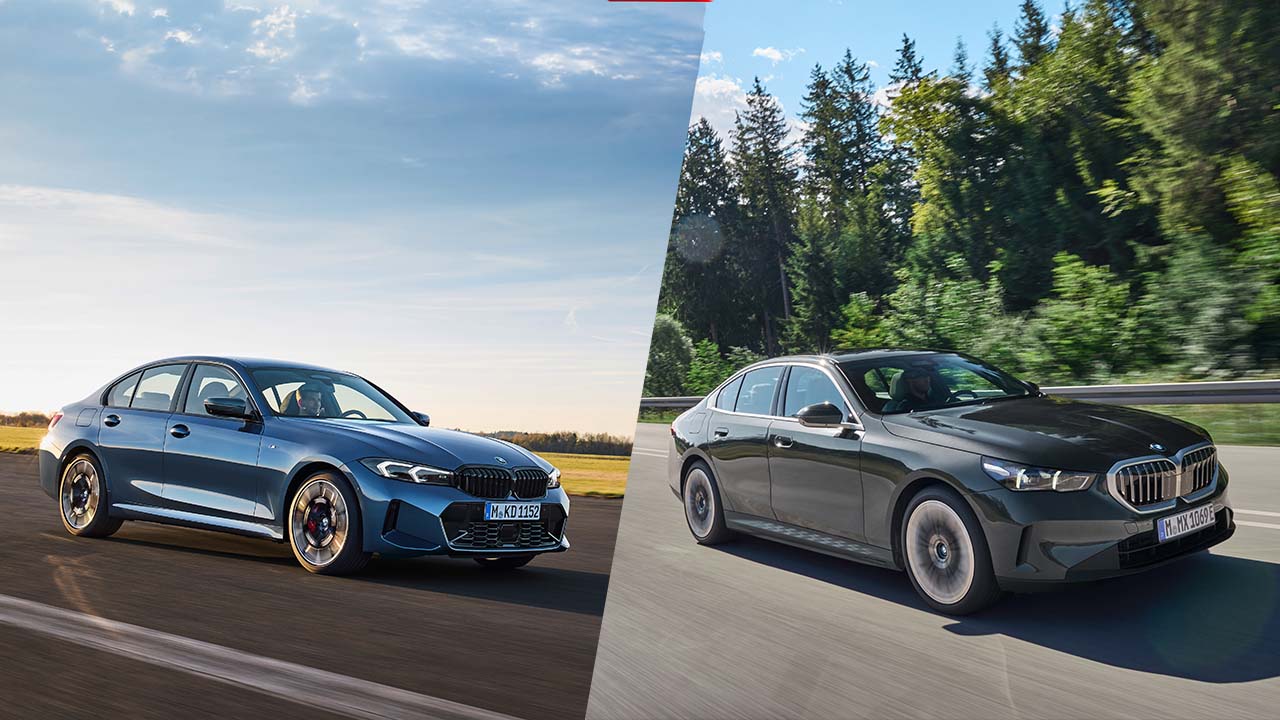
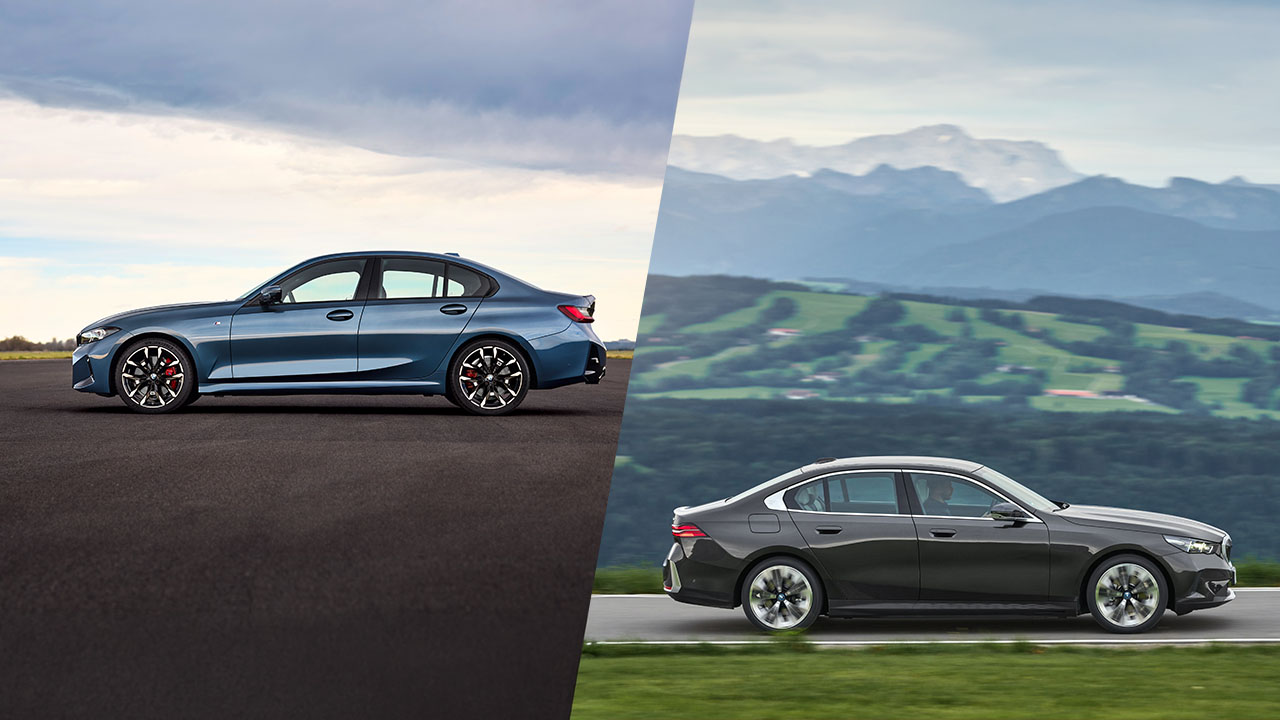
Few brands guard a family look as closely as BMW, yet the 3 Series and 5 Series now express that resemblance in quite different ways.
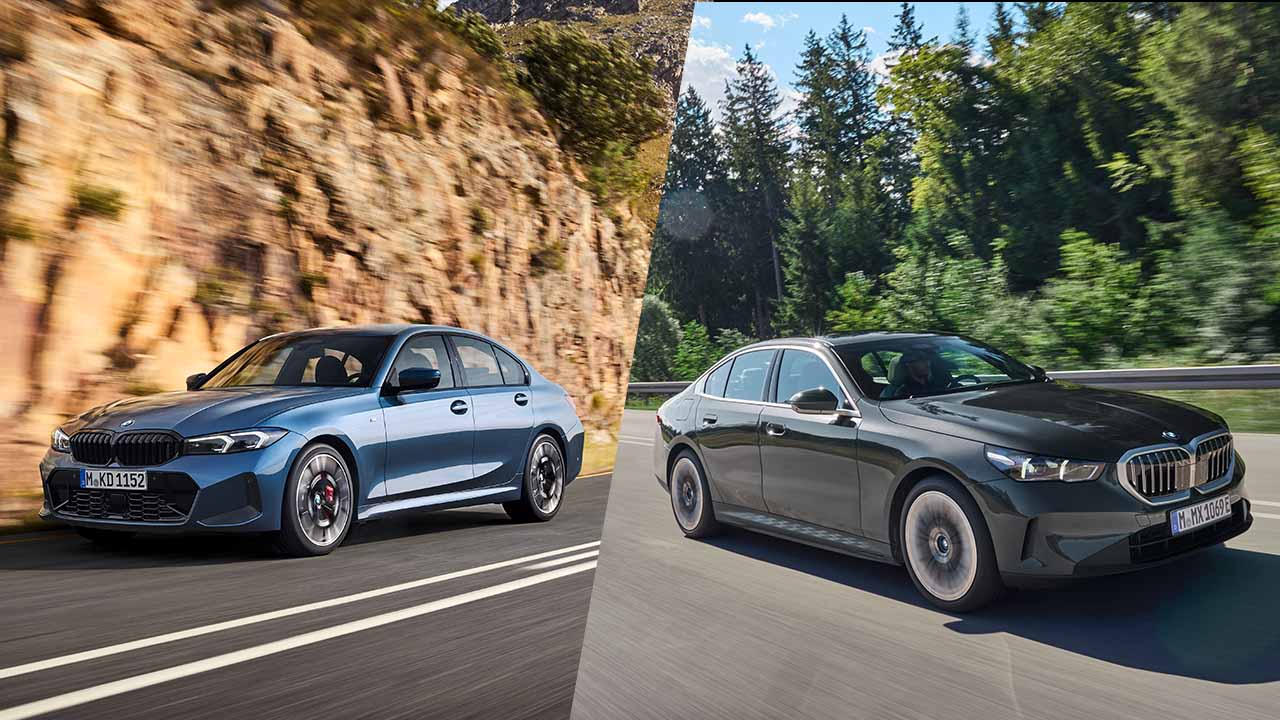
The current 3 Series wears BMW's Neue Klasse design language, a name that dates back to the 1960s saloons that paved the way for the 3 Series itself and is now shared with the iX3. A long wheelbase and short overhangs give it an athletic stance, and the kidney grille merges with the twin headlights to form a single unit. The previous generation is a more traditional take on the same formula, and it still looks sharp today.
After dark, the illuminated kidney grille available on some cars helps the 5 Series stand out. In daylight, a longer wheelbase and a broader stance give the car a stronger executive presence than the 3 Series. The Touring estate keeps the same sleek profile all the way back to the tailgate.
Practicality and Boot Space
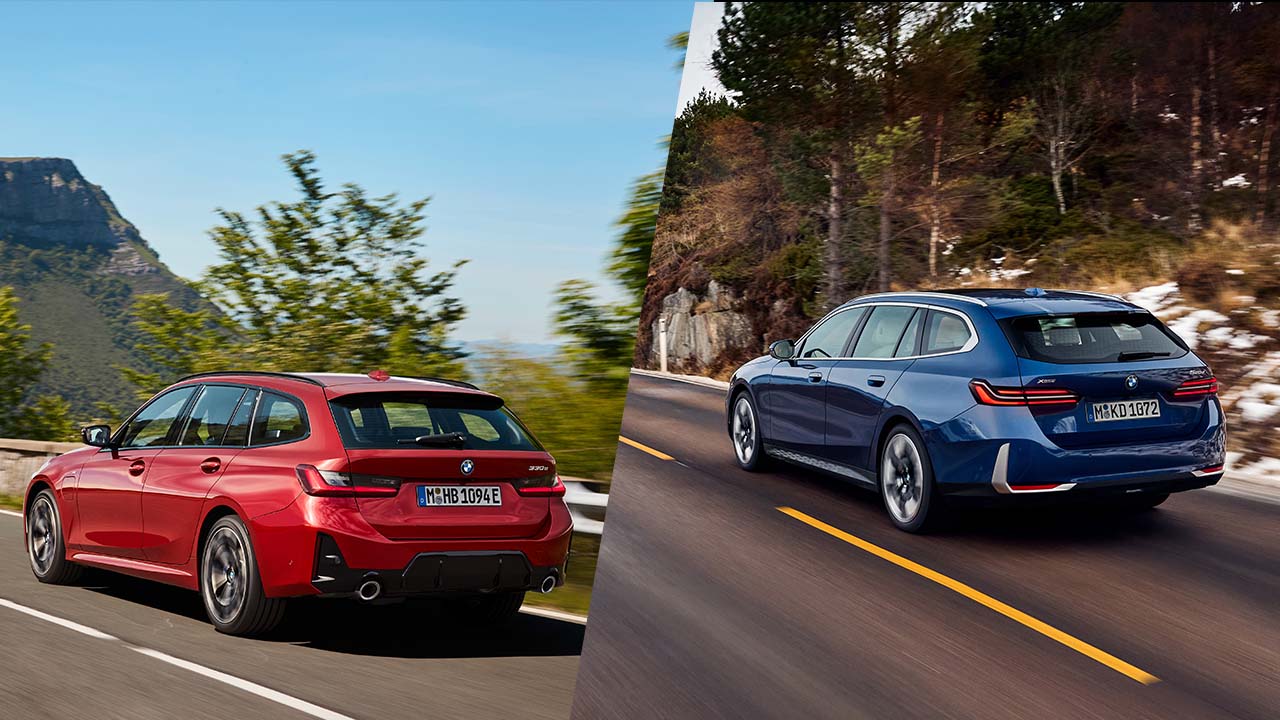
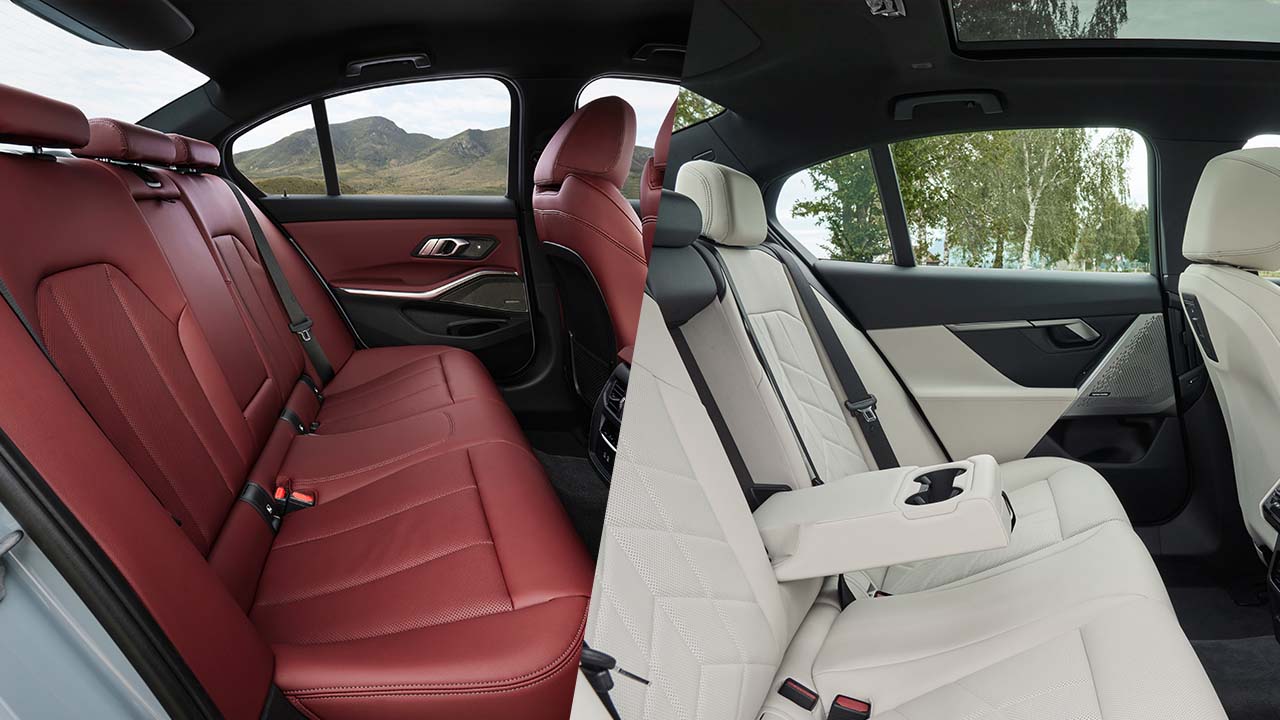
A weekend away with the family and a full set of luggage is where the extra length of the 5 Series starts to make a real difference. The saloon has 520 litres of boot space in petrol and plug-in hybrid form, and the electric i5 gives up a little to its battery at 490 litres. The Touring goes further, with 570 litres even when every seat is occupied and up to 1,700 litres with the rear seats folded.
At around 30cm shorter than the 5 Series, the 3 Series is the easier car to guide through a tight multi-storey car park and into a narrow space at the end of a row. The petrol car's 450-litre boot takes the weekly shop comfortably, and the electric i3 offers 420 litres plus a further 31 under the bonnet. The previous generation offered around 480 litres in saloon form. Every version of the current car has a 40:20:40 split-folding rear seat, so longer items can travel between two seated passengers.
Technology and Features
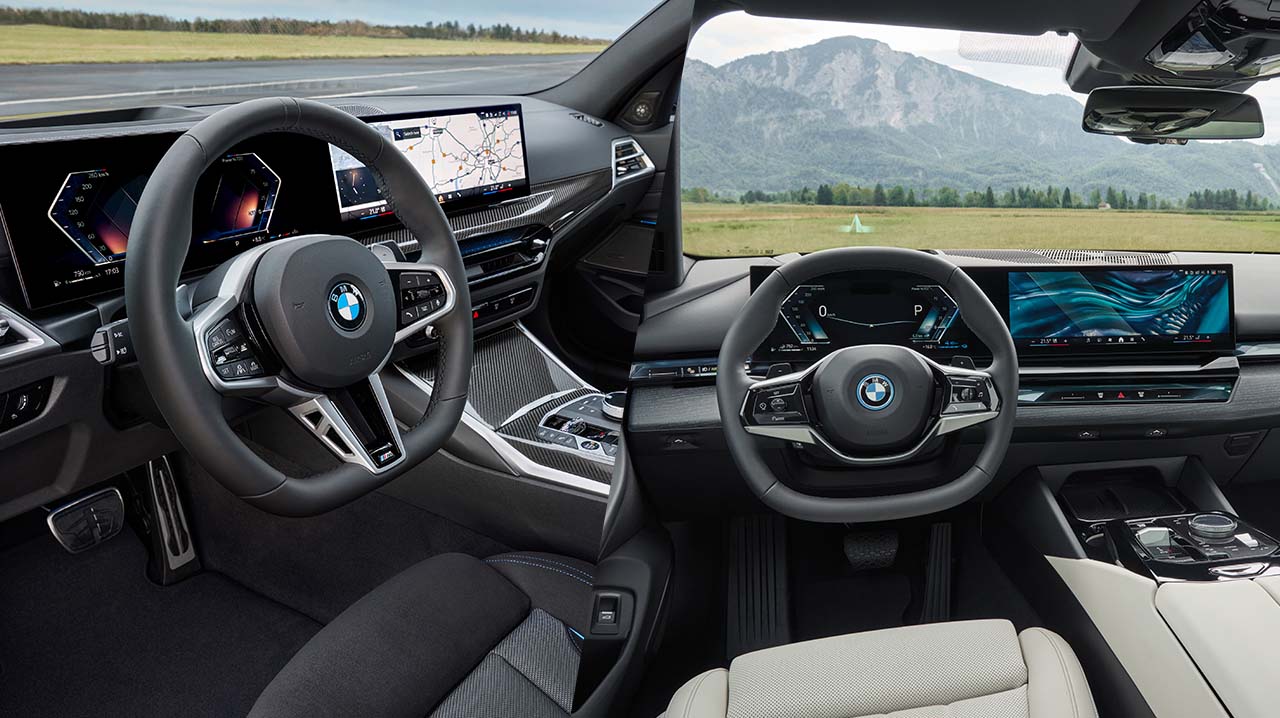
The first thing to catch the eye in the current 3 Series is the 17.9-inch touchscreen, angled towards the driver. Alongside it, Panoramic Vision spans the full width of the lower windscreen and puts key driving information in the driver’s line of sight. An available 3D head-up display builds on that approach. The 5 Series takes a more familiar route, with a curved display that joins a 12.3-inch display to a 14.9-inch touchscreen. A rotary iDrive controller on the centre console remains within easy reach.
On a long journey, the 3 Series can add a Motorway Assistant for supervised hands-free driving on compatible motorways. The optional Driving Assistant Professional package for the 5 Series brings lane keeping and help when merging onto the motorway.
The cabins differ in mood too. A panoramic glass roof can brighten the 3 Series interior. The 5 Series leans towards a more lounge-like feel, with an illuminated Interaction Bar across the dashboard whose lighting changes with the selected My Mode setting.
Powertrains and Performance
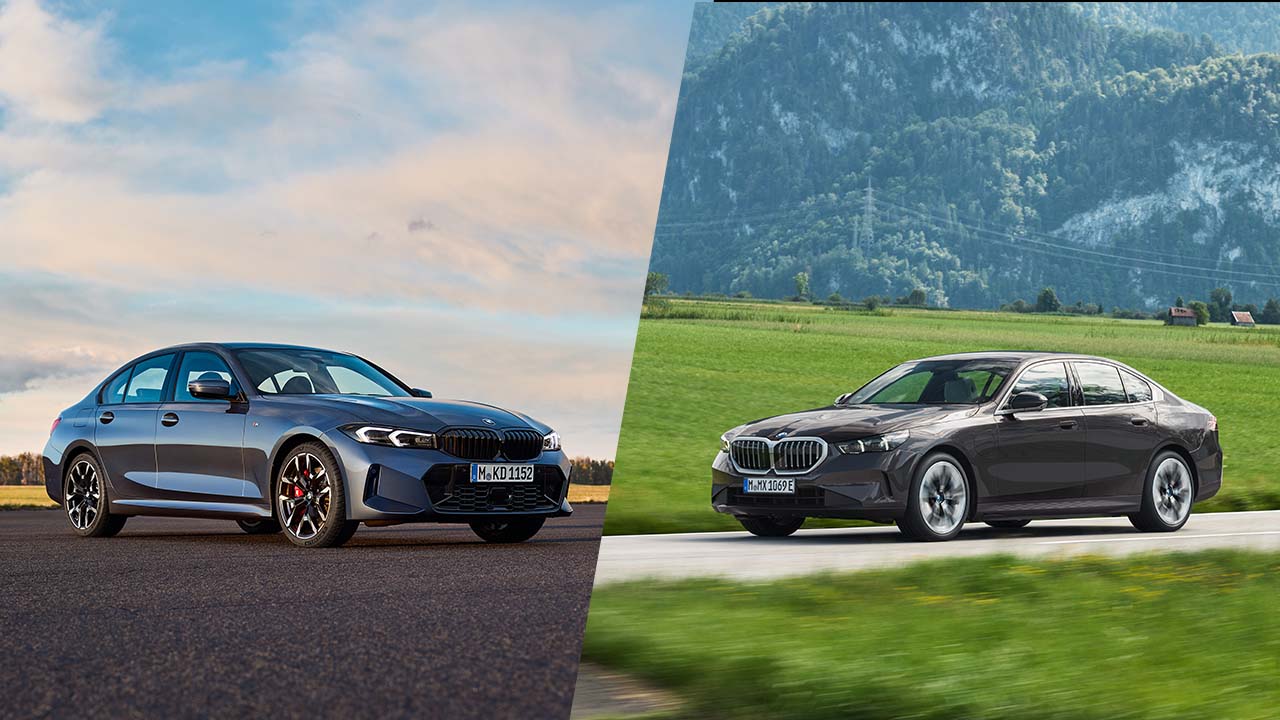
The 320 opens the petrol line-up, reaching 62mph from rest in 7.4 seconds. The M350 xDrive goes much further, pairing a 3.0-litre straight-six with all-wheel drive and 437bhp, more than double the 320's 208bhp, to reach 62mph in 4.1 seconds.
For electric driving, the i3 offers a range of more than 500 miles on a charge. Used buyers can also look to the previous generation, which added diesel engines, the 330e plug-in hybrid and the M3.
The 5 Series is built around choice. The 530e plug-in hybrid can cover many daily journeys on electric power alone, with a petrol engine ready for longer trips, and the fully electric i5 can cover more than 300 miles on a charge.
At the top of the range, the i5 M60 xDrive produces up to 593bhp from two electric motors and reaches 62mph in 3.8 seconds. The plug-in hybrid M5 teams a V8 engine with an electric motor for 717bhp and a 3.5-second run to 62mph, yet it can still cruise on electric power alone, keeping the V8 in reserve.
Safety and Reliability
Both models have performed well in independent crash testing. The previous-generation 3 Series was awarded five stars by Euro NCAP in 2019, and the 5 Series achieved the same rating in 2023. The criteria have become stricter over time, so the results are not a precise like-for-like comparison, but five stars is the top rating whichever year a car is tested.
Each car comes with autonomous emergency braking and lane support systems, and the 5 Series can be specified with Parking Assistant Professional, which allows manoeuvres to be controlled from a smartphone.
Reliability is generally respectable for both. BMW uses its petrol engines and eight-speed automatic gearbox across much of the range, so parts and technician expertise are easy to find. Anyone buying a used 3 Series or 5 Series should always ask for a full service history and check that any recall work has been completed.
Price and Running Costs
The 3 Series is the more accessible way into executive saloon ownership, and it typically costs less than a 5 Series of similar age and specification. The step-up buys extra space, refinement and a wider range of engines, so higher insurance, servicing and tyre costs are likely with the larger car. The original M5 cost around 86,000 Deutsche marks in the mid-1980s, almost 10,000 more than a Porsche 911 Carrera, a reminder that BMW's fastest saloons have long commanded a premium.
The biggest influence on fuel costs in either range is the choice of powertrain. The four-cylinder petrol cars are the most efficient petrol options, and the mild hybrid diesels in the 5 Series and earlier 3 Series cars still suit high-mileage drivers. The plug-in hybrids change the sums for those who charge at home and make mostly short trips, as they can use very little fuel from week to week. The electric i3 and i5 need no petrol at all.
Which One Should You Buy?
The BMW 3 Series and BMW 5 Series both deliver the polish, driving appeal and technology that buyers expect from the brand. The 3 Series is the agile, more compact choice, now with Neue Klasse styling, and the 5 Series is the roomier, more relaxed option with a powertrain to suit almost every driver.
Used buyers are well placed, whichever way they lean. The previous-generation 3 Series is widely available, and a used 5 Series brings a larger, more luxurious car within reach of many budgets.
Each car excels at what it sets out to do, so the right choice comes down to the journeys you make most often.
Frequently asked questions
The BMW 5 Series is the larger car, around 30cm longer than the current 3 Series, with a bigger boot and a wider range of engines, including diesel and plug-in hybrid versions. The 3 Series is the more compact of the two, with its own fully electric version in the i3.
Space is usually the deciding factor. The 5 Series is around 30cm longer, with extra rear and boot space that becomes valuable once the rear seats see regular use or long motorway journeys become a habit. For mostly short journeys, the 3 Series is easier to park and still rewarding to drive.
Yes, the BMW 3 Series is a good car for drivers who want a compact, rewarding executive saloon. More than 18 million have been sold worldwide since 1975, and the current car brings Neue Klasse styling, a 17.9-inch touchscreen display and a choice of petrol or electric power.
Absolutely. The BMW 5 Series is a good car for those who appreciate space, comfort and refinement. It earned a five-star Euro NCAP rating, and the Touring adds even more room for shopping and luggage.
Yes, the BMW i5 is the fully electric version of the 5 Series, offered as a saloon and a Touring. The eDrive40 can cover more than 300 miles on a charge, and the M60 xDrive saloon up to 320 miles.
A used BMW 3 Series or 5 Series is a strong buy, with plenty of choice on offer. The previous-generation 3 Series is widely available, and a used 5 Series brings a larger, more luxurious car within reach of many budgets. Whichever you choose, ask to see the full service history and check that any recall work has been carried out.
Still undecided?
A drive in each car is the surest way to find your answer. Stratstone offers the latest BMW models alongside a selection of approved used 3 Series and 5 Series cars, so you can compare them with expert help close at hand, get in touch with your nearest Stratstone BMW Retailer.


