There are cars that win races. There are cars that define eras. And then, very occasionally, there is a car that does both — and then returns, four decades later, to remind the world exactly how.
The Porsche 935 arrived in 1976 as a turbocharged force of nature forged from the bones of the 911 Turbo. It then dominated international motorsport for the better part of a decade, and earned an overall win at the 24 Hours of Le Mans. This result remains one of the most remarkable victories in endurance racing history.
Then, in 2018, Porsche decided to turn the clock back. The result was a 77-unit tribute car that carried the 935 name, the 935's silhouette, and a considerable amount of its soul. It was not built to compete in any championship, but simply because some cars deserve to exist beyond mere photographs and memories.
- Born From the 911 Turbo: Where It All Began
- The Moby Dick Years
- Le Mans, 1979
- Forty Years On: The Return of an Icon
- Built to Honour, Designed to Intimidate
- The View From Behind the Wheel
- 700bhp of Barely Contained Fury
- Frequently Asked Questions
Born From the 911 Turbo: Where It All Began
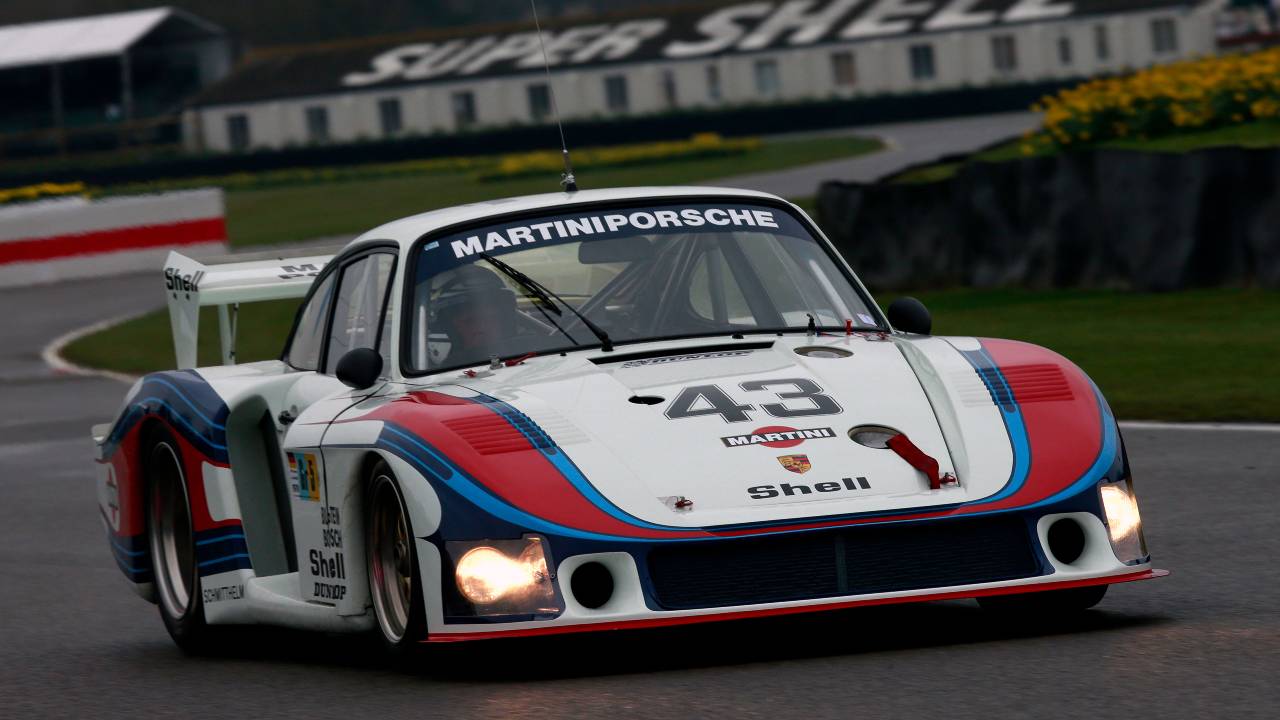
To understand the 935, you first need to understand the world it was built for. The FIA's Group 5 regulations of the mid-1970s were a gift to manufacturers willing to think creatively. They allowed near-complete freedom over bodywork, provided the car's fundamental architecture — wheelbase, engine position, basic chassis structure — remained traceable to a production model. Porsche took the 930 (better known to the world as the 911 Turbo) and got to work.
The original 935 debuted in 1976 with a 2.85-litre turbocharged flat-six producing around 590bhp. In its first season, it won the FIA World Championship outright, a result that announced both the car and the era in unmistakable terms. Rivals were left to contemplate a car that looked, from certain angles, like a road-going 911 — and then proceeded to humiliate everything else on the grid.
Customer cars followed almost immediately. Private teams across Europe and North America began racing their own 935s in national and international series, and the results were similarly emphatic. The Kremer brothers in Cologne developed their own highly modified K-series variants, which became some of the most successful customer racing cars of the era.
The Moby Dick Years
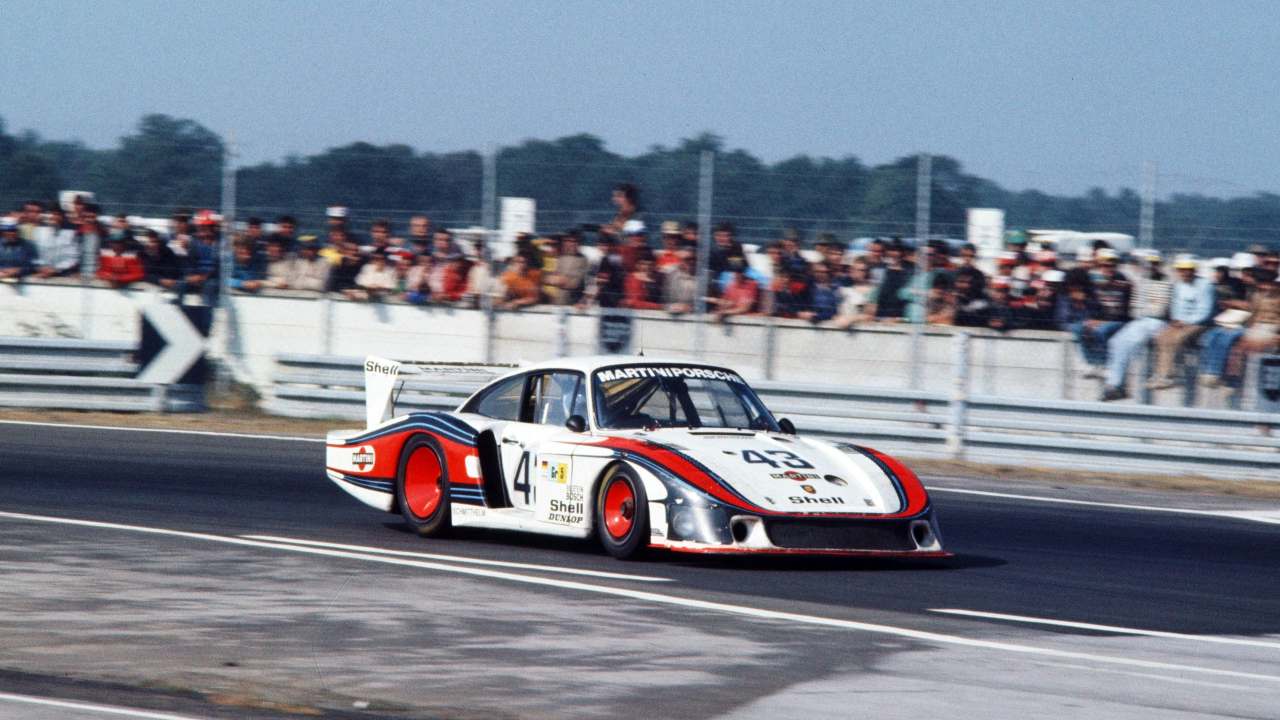
For the 1978 season, Porsche's engineers asked what if the rules existed simply to tell us where to start rather than stop? The answer was the 935/78; a car so radically different from its predecessors that it barely resembled the 911 from which it was derived.
The engine grew to 3.2 litres with water-cooled cylinder heads and a twin-turbo arrangement that pushed output beyond 845bhp. The bodywork was transformed into a long, low, aerodynamically sculpted form with enormous rear fairings and a dramatically extended tail. It was vast. It looked, someone observed, like a whale — earning it the nickname Moby Dick.
The most famous 935 never won Le Mans. Even though the 935/78 hit a staggering 227mph on the Mulsanne Straight, Rolf Stommelen and Manfred Schurti were plagued by the reliability issues that inevitably accompany something built this close to the edge of what engineering can achieve. On pure pace, the car was extraordinary. On race duration, its complexity worked against it. Despite its legendary status, the Moby Dick finished eighth overall. The greatest victories would come from elsewhere in the 935 family. However, at the Six Hours of Silverstone that year, it was two seconds faster than the rest of the field in practice and went on to win the race comfortably.
Porsche retired the car to their museum at the end of 1978. The Moby Dick had raced just a handful of times, but still became one of the most recognisable and beloved shapes in motorsport history.
Le Mans, 1979
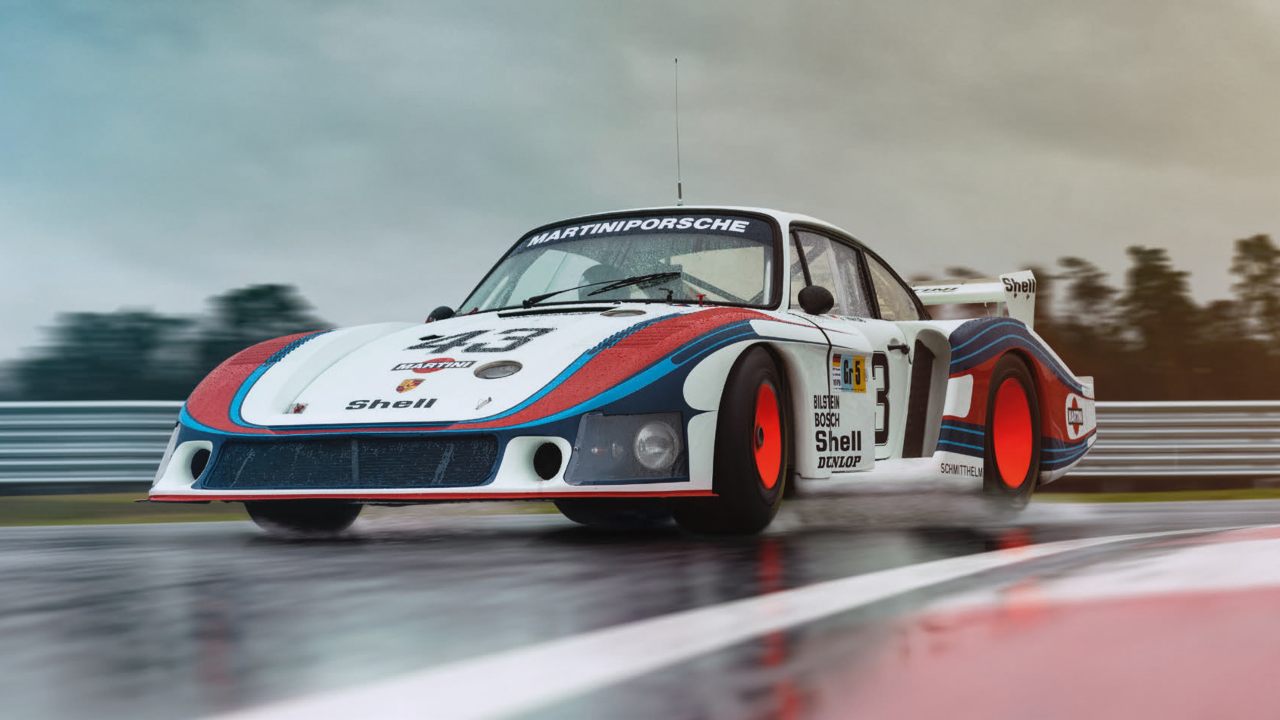
If the 935/78 showed Porsche at its most technically audacious, then the 1979 24 Hours of Le Mans showed the 935 at its most historically significant. A Kremer-built 935 K3, entered under the Kremer Racing banner and driven by Klaus Ludwig, Don Whittington and Bill Whittington, won the race overall.
To be clear about what that meant: a car that was fundamentally derived from a production-based 911 Turbo took the victory at the world's greatest endurance race, ahead of dedicated prototypes. It remains one of the very few production-based cars ever to achieve such a result at Le Mans, and it is the achievement that most firmly cements the 935's place in motorsport mythology.
By the mid-1980s, the 935 had accumulated more than 150 race wins worldwide, including multiple victories at Daytona and Sebring, and helped Porsche dominate international sports car racing. By then, the FIA had changed the rules — and the 935's time was up.
Forty Years On: The Return of an Icon
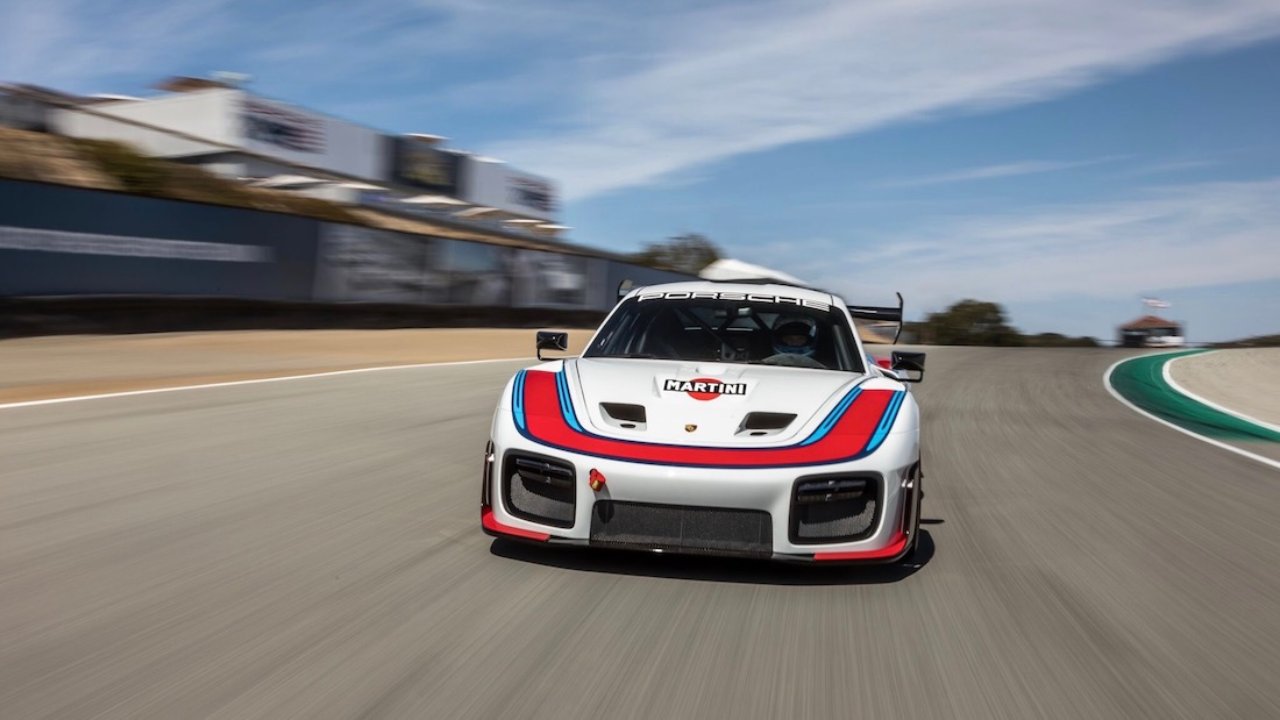
In September 2018, Porsche gathered the most devoted members of its global community at WeatherTech Raceway Laguna Seca in California for the sixth Rennsport Reunion — a regular event that brings together historic and modern Porsche racing cars in a way that no other manufacturer event is quite able to replicate.
Among the 917s and 936s and historic 911 RSRs assembled at that event, Porsche unveiled something new. The 935 was back.
Dr Frank-Steffen Walliser, Vice President Motorsport and GT Cars at Porsche, framed it simply: "This spectacular car is a birthday present from Porsche Motorsport to fans all over the world." It was interesting that Porsche was marking its 70th anniversary as a car manufacturer with a tribute to the 935 rather than a new road vehicle or a concept car. Crucially, Walliser noted that because the car was not intended for any championship, but built only for track days and private events, the engineers and designers were free from the usual regulatory constraints.
Production would be limited to 77 units — a number chosen as a nod to the 935's successful 1977 racing campaign. All 77 examples were spoken for before deliveries began in June 2019.
Built to Honour. Designed to Intimidate.
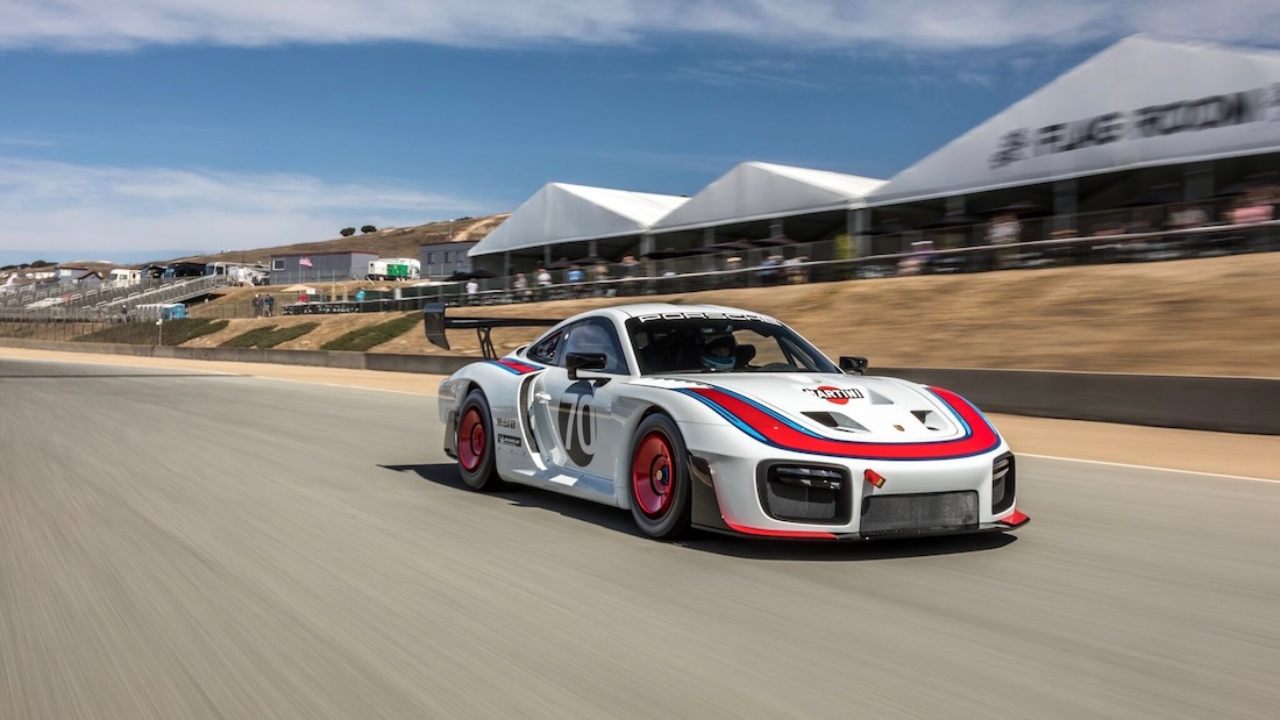
There is something immediately familiar about the 2019 935, even if you cannot place it at first. The profile — the elongated rear, the enormous aerodynamic bodywork, the wide faired arches — is a modern interpretation of the 935/78, rendered in carbon fibre rather than fibreglass and shaped by contemporary aerodynamic understanding rather than 1970s intuition.
The team at Porsche Motorsport were meticulous about where the references came from. The aerodynamically capped turbofan wheels echo those of the original 935/78. The LED rear lights are embedded into the endplates of the rear wing, a nod to the 919 Hybrid LMP1 car that won Le Mans three times in succession between 2015 and 2017. The twin exposed titanium tailpipes are drawn from the 1968 Porsche 908. The side mirrors are lifted directly from the 911 RSR.
The rear wing alone is 1,909mm wide and 400mm deep, providing the aerodynamic balance that the extreme body demands. The wheel arch air vents on the front fairings, shared with the 911 GT3 R customer race car, increase front downforce and manage the turbulent air around the tyres with precision.
Customers could specify one of eight exterior finishes, including a number of classic racing liveries. The most evocative option was the Martini Racing design — the blue, red and white diagonal striping that ran across Porsche factory racers of the 1970s. This livery is instantly recognisable to anyone with even a passing familiarity with the marque's motorsport history.
The View From Behind the Wheel

Climbing into the 935 requires a degree of commitment. The FIA-specification roll cage encloses the cockpit entirely, and the Recaro racing bucket seat is secured in place by a six-point harness. This is the architecture of a race car, not a road car dressed up for circuit days.
The details in the cockpit are carefully chosen. The gearshift knob carries a laminated wood veneer finish that echoes the interiors of the 917, the 909 Bergspyder and the Carrera GT, referencing the analogue craftsmanship of an earlier era. The carbon fibre multifunction steering wheel and the colour display behind it are taken directly from the 911 GT3 R, the current-generation customer endurance racer.
A Cosworth ICD instrument cluster serves as the primary display, incorporating a data logger, a boost gauge in vintage styling and a Sport Chrono watch. Porsche Track Precision Race App compatibility is standard, allowing lap data and telemetry to be monitored and reviewed from a smartphone. Air conditioning is fitted — a concession to the track day environment the car was designed for, where sustained driving sessions rather than sprint races are the likely use. An optional passenger seat is also available for instructors or fortunate co-drivers.
700bhp of Barely Contained Fury
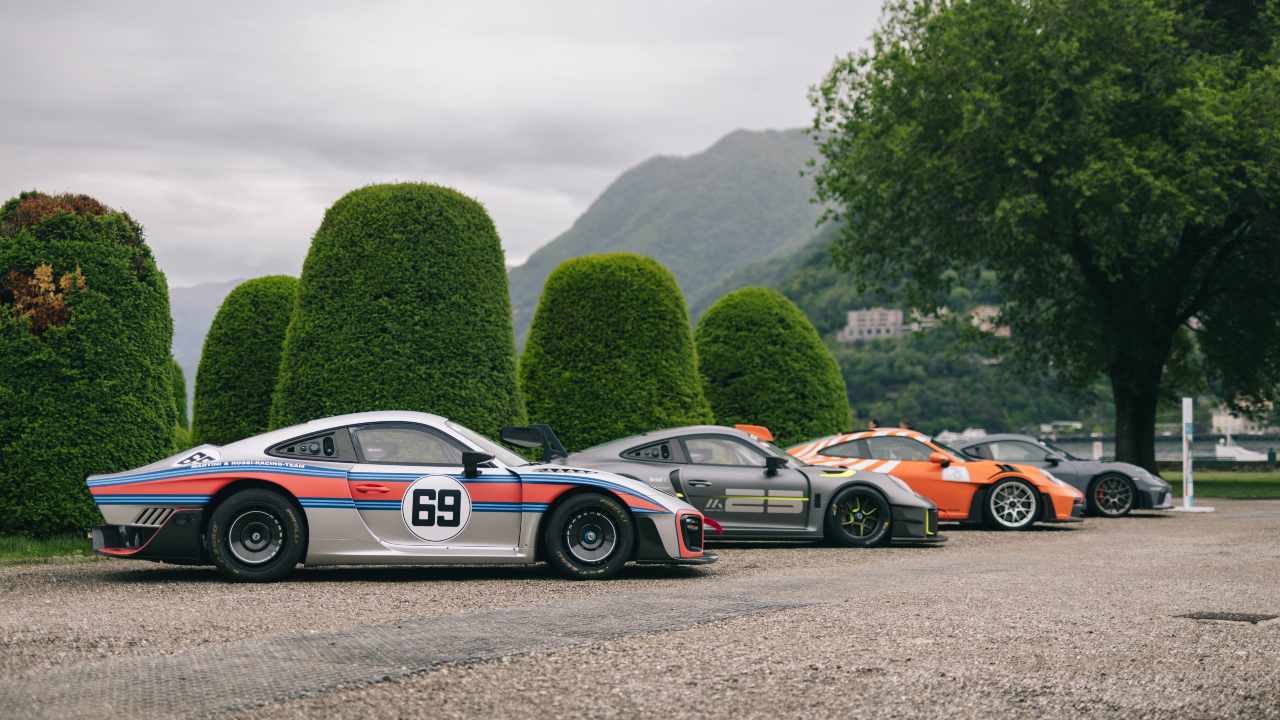
The 911 GT2 RS, the road car on which the 935 is based, was the most powerful production 911 ever built at the time of its launch. Its 3.8-litre twin-turbocharged flat-six is among the most developed engines Porsche has produced for the road.
In 935 specification, that engine produces 700bhp, channelled through a seven-speed PDK dual-clutch gearbox with a limited-slip differential optimised for track use. From rest to 62mph takes around 2.5 seconds. Top speed is 211mph. The 935 weighs approximately 1,380kg in race-ready trim — a figure that reflects the car's dual brief as both an extreme performance machine and a usable clubsport racer.
Porsche Stability Management, including traction control and ABS, is fitted as standard. These systems can be individually adjusted or switched off entirely; sensible for a car whose owners are likely to be experienced track drivers. Three-way adjustable racing dampers are fitted at both axles, giving drivers control over the car's balance and compliance.
At the front, six-piston aluminium monobloc racing brake callipers work on 380mm ventilated steel discs; the rear carries four-piston units on 355mm discs. A dual-circuit brake system with an adjustable balance bar allows the driver to fine-tune front-to-rear bias. Rather than road-to-track conversions, these are authentic racing components.
There is also a 115-litre FIA-compliant safety fuel cell in the front of the car, an integrated fire suppression system with electronic release and an escape hatch in the roof — all in compliance with FIA regulations. For a car that Porsche positions as a clubsport racer, the level of safety engineering is serious, suggesting the 935 was built to be pushed to the limit.
Frequently asked questions
The 2019 Porsche 935 was priced from £625,000, excluding local taxes. Given the car's mechanical foundation in the 911 GT2 RS and the bespoke carbon fibre bodywork developed specifically for the programme, along with its strict production limit, that figure reflects both the cost of production and the rarity of what was on offer. Examples have since appeared at auction and specialist dealers at significantly elevated values.
The short answer is no. The 2019 Porsche 935 is a track-only machine, not certified for championship competition and not approved for road use. It was designed from the outset for private circuit events and track days, which is reflected in every aspect of its specification. That includes everything from the safety fuel cell and fire suppression system to the absence of road-going lights, number plate provisions or any other concession to public road use.
Both cars share the same fundamental DNA: a rear-engined, turbocharged flat-six mounted in a heavily modified body drawing its lineage from the 911. The original 935 was based on the 930 (the 911 Turbo road car of its era). The 2019 tribute is based on the 911 GT2 RS (the 991.2-generation 911 Turbo's most extreme road-going descendant). The exterior design of the tribute car is specifically modelled on the 935/78 Moby Dick, and many individual components deliberately reference cars from across Porsche's racing history.
Experience Porsche with Stratstone
Reflecting an era of motorsport dominance, the 935 occupies a unique place in Porsche's history. All 77 examples of the tribute model now reside in private collections, and the original race cars command prices that reflect their significance to the sport.
Porsche's broader range carries that same commitment to performance, precision and heritage into cars you can drive every day. As an authorised Porsche retailer, Stratstone is here to help you explore what the brand has to offer — from new models to carefully selected approved used vehicles. Contact your nearest Stratstone Porsche retailer to find out more.