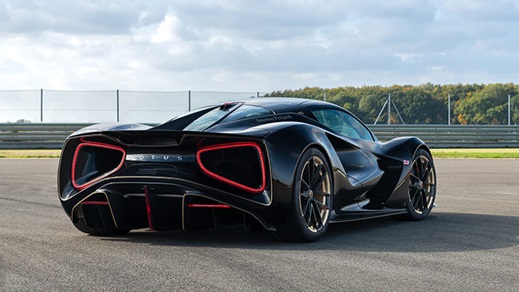
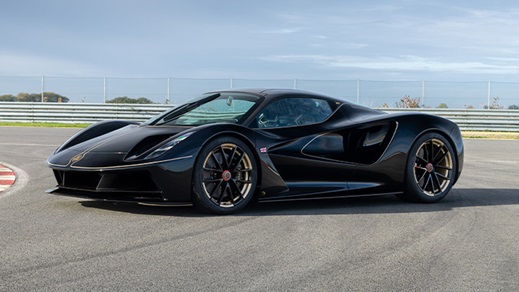
There is a car that exists somewhere between a road-going hypercar and a purpose-built racing machine. One that could, in another life, have taken you to a dinner reservation, yet has been engineered to hunt down lap records at the most punishing circuit in the world. That car is the Lotus Evija X, and it may just be the most extraordinary thing to emerge from Hethel in the brand's 75-year history.
The Evija X blurs categories in a way even hypercars rarely do. It uses the same carbon fibre chassis and powertrain architecture as a road-going Evija, yet generates downforce figures that exceed some Le Mans prototypes. It is also, in every sense, a statement. A declaration that the next chapter of Lotus would be written with absolute conviction.
In this article:
- A New Direction For Lotus
- A Design That Breathes
- The Monster in the Shadows
- 6 Minutes 24 Seconds. On a Wet Track
- The 2,011bhp Experience
- Where It Fits in Lotus History
- Frequently Asked Questions
A New Direction For Lotus
To understand the Evija X, you first need to understand the Evija. Unveiled in London in July 2019, this was the first all-electric hypercar ever to be built in Britain. It was also the first major model launched under the ownership of Geely, the Chinese automotive group that had acquired the brand and embarked on the most ambitious revival in Lotus's history.
The "Type 130" internal codename referenced Lotus tradition. Every significant Lotus road and race car has carried a Type number, meaning the Evija wasn't positioned as a break from Lotus history, but as its continuation into a radically different era. Production was limited to a mere 130 examples — a figure set in direct tribute to the given project number. At around two million pounds each, it was never going to appeal to the casual weekend driver.
The name chosen for this extraordinary machine was deliberate. Evija — pronounced "E-vi-ya" — means "the first in existence" or "the living one." For a company introducing not just a new model but an entirely new direction, the name felt appropriate.
The Evija also remains true to the guiding principles of Colin Chapman, who founded Lotus in 1948. It is the first Lotus road car to feature a one-piece carbon fibre monocoque chassis — a technology Lotus had pioneered in Formula 1 decades earlier, now applied to a road car for the first time in the marque's history. Engineering heritage and ambition, fused into a single shell of carbon fibre.
A Design That Breathes
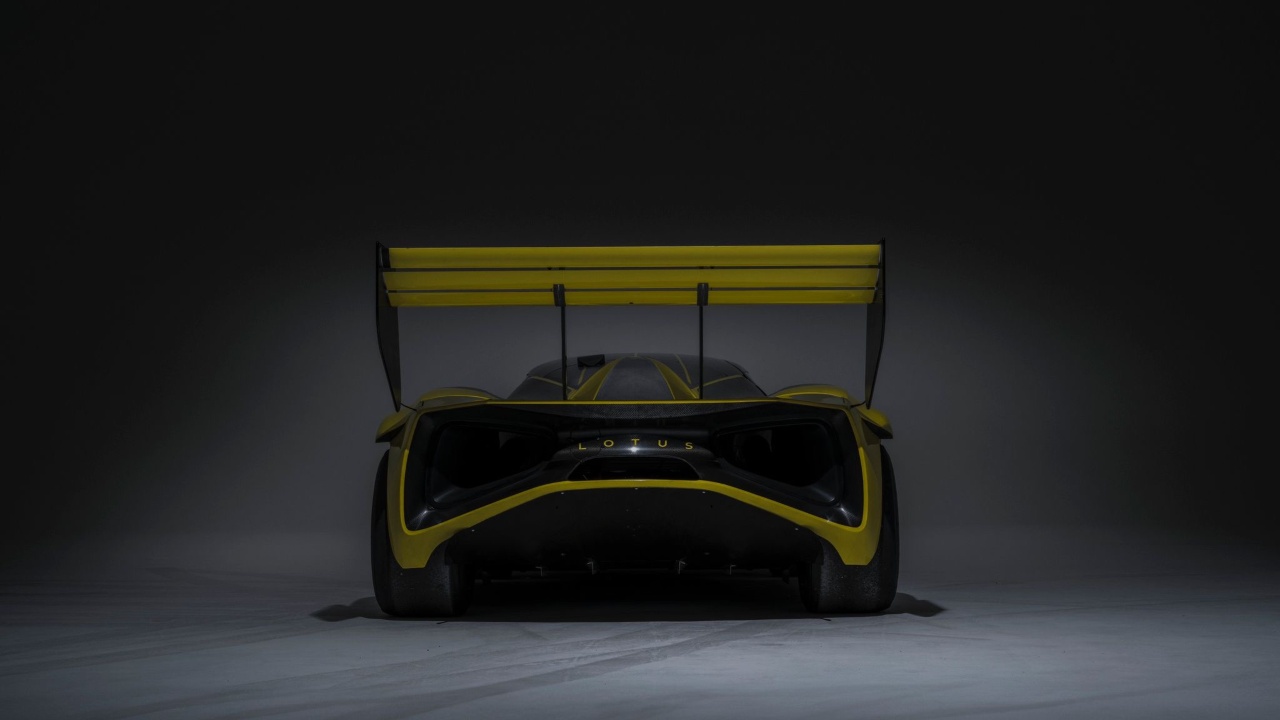
The Evija stops you in your tracks. It sits low and tense on the road, a teardrop silhouette so thoroughly considered that every surface appears to have earned its place.
The overall aerodynamic philosophy, according to Lotus chief aerodynamicist Richard Hill, is about keeping the airflow low and flat at the front and guiding it through the body to emerge high at the rear. In simple terms, it transforms the whole car into an inverted wing. Hill has spent more than 30 years at Hethel, and his summary of how the Evija compares to a conventional sports car is hard to forget: most supercars try to "push a hole" through the air, while the Evija instead manipulates airflow like a fighter jet. That philosophy led Lotus to create what is effectively a porous hypercar — one that allows air to travel through the body rather than merely around it.
The most striking example of this philosophy is the gaping side tunnels that punch through the car from its midsection all the way out to the tail. Rather than simply parting around the bodywork, air is channelled through the car itself, accelerating as it goes and exiting at the rear in a way that actively cleans up the airflow behind the car — reducing drag and keeping the Evija planted at speed. The rear wing then elevates from its resting position flush to the upper bodywork, deploying into clean air above the car to generate further downforce at the rear wheels. The car also has an F1-style Drag Reduction System, a movable wing element that reduces drag on the straights to achieve a higher top speed.
The result, even on the road-going Evija, is formidable downforce. The standard car produces more than 3,700 pounds of downforce at speed. In the Evija X, that figure nearly doubles.
The Monster in the Shadows
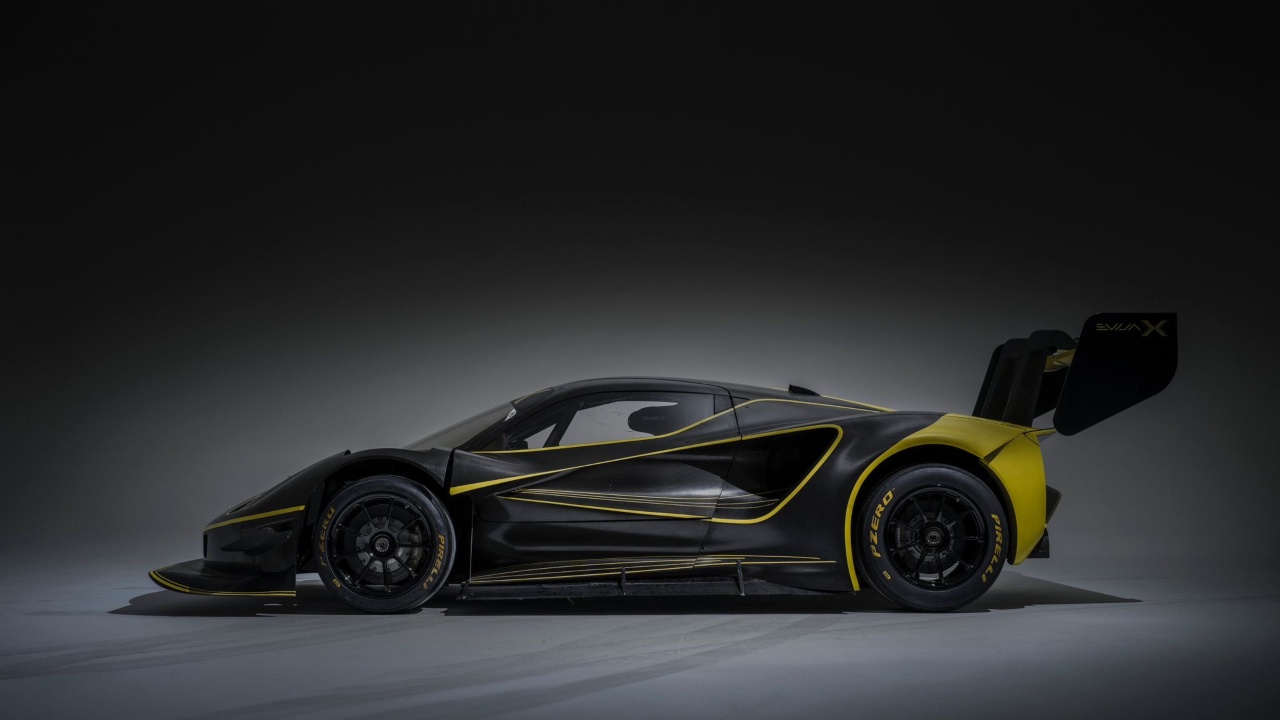
Prototype spy shots of the Evija X first emerged in 2023 — a monstrous, winged shape circling the Nürburgring during a closed testing session. Lotus officials confirmed its existence as "an all-new technology concept" and "the ultimate expression of Evija." That was enough to send the automotive world into a frenzy of speculation.
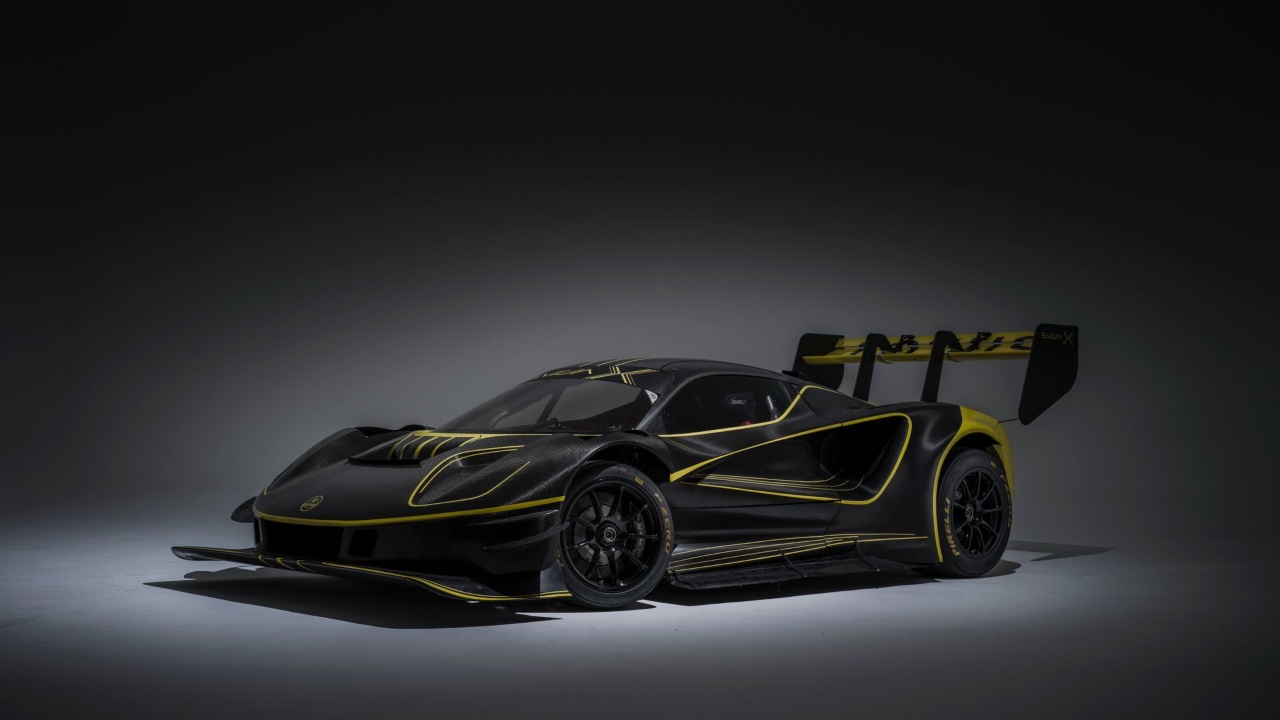
When the full picture emerged, it became clear that the Evija X retains the same carbon fibre monocoque, quad-motor powertrain, and battery pack as the road-going car. This was a deliberate choice to preserve its production-chassis classification. The four electric motors deliver 2,011bhp and enough torque to make the sprint from 62 to 124mph take under three seconds, with the subsequent dash from 124 to 186mph taking less than four.
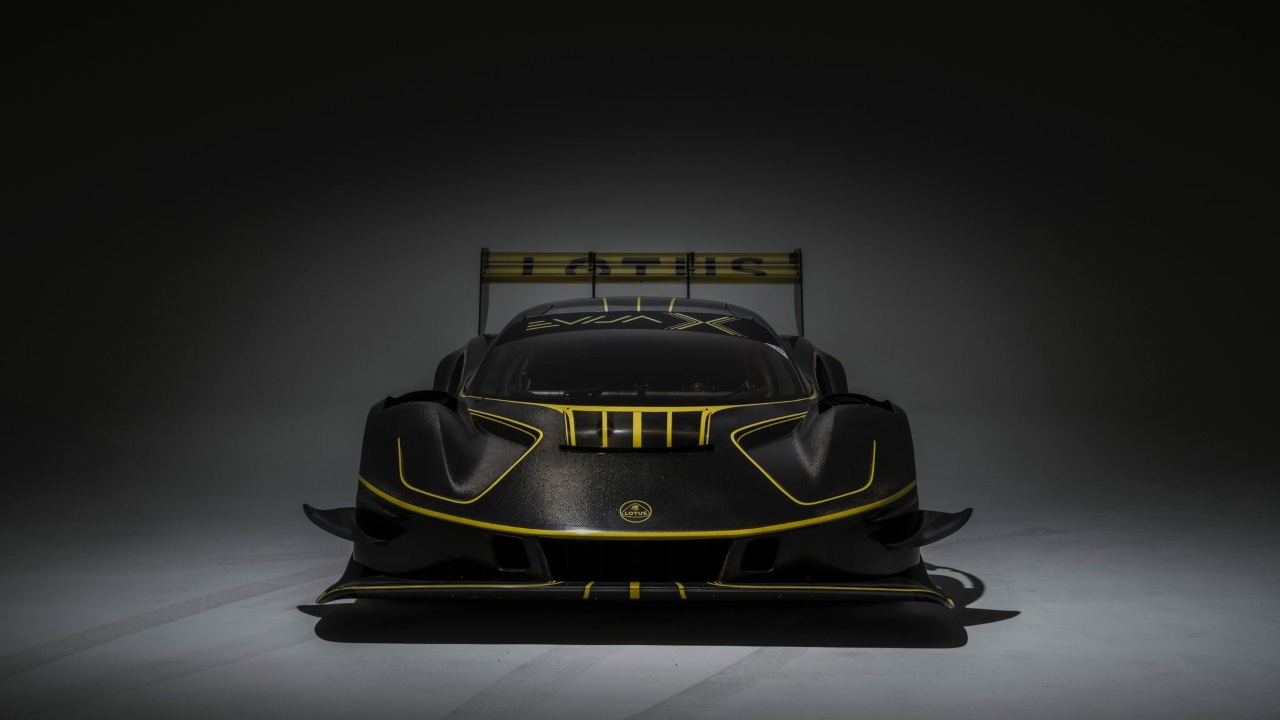
Everything beyond the powertrain, however, is different. Up front, a pronounced splitter and multiple canards bite into the airflow, while openings cut above the front wheels evacuate turbulent air before it can disrupt the bodywork further back. Along the flanks, revised side skirts tighten the aero package, and then there is that rear wing — enormous, purposeful and flanked by its own drag reduction system. Nothing here is merely decorative.
The net result is more than 6,600 pounds of downforce at speed — nearly double the road car — with Pirelli racing slicks providing the grip to convert that colossal aero load into cornering performance. The entire programme was developed in partnership with Multimatic, the firm that has also worked on the Ford GT and Aston Martin Valkyrie. This is serious company to be keeping.
6 Minutes 24 Seconds. On a Wet Track
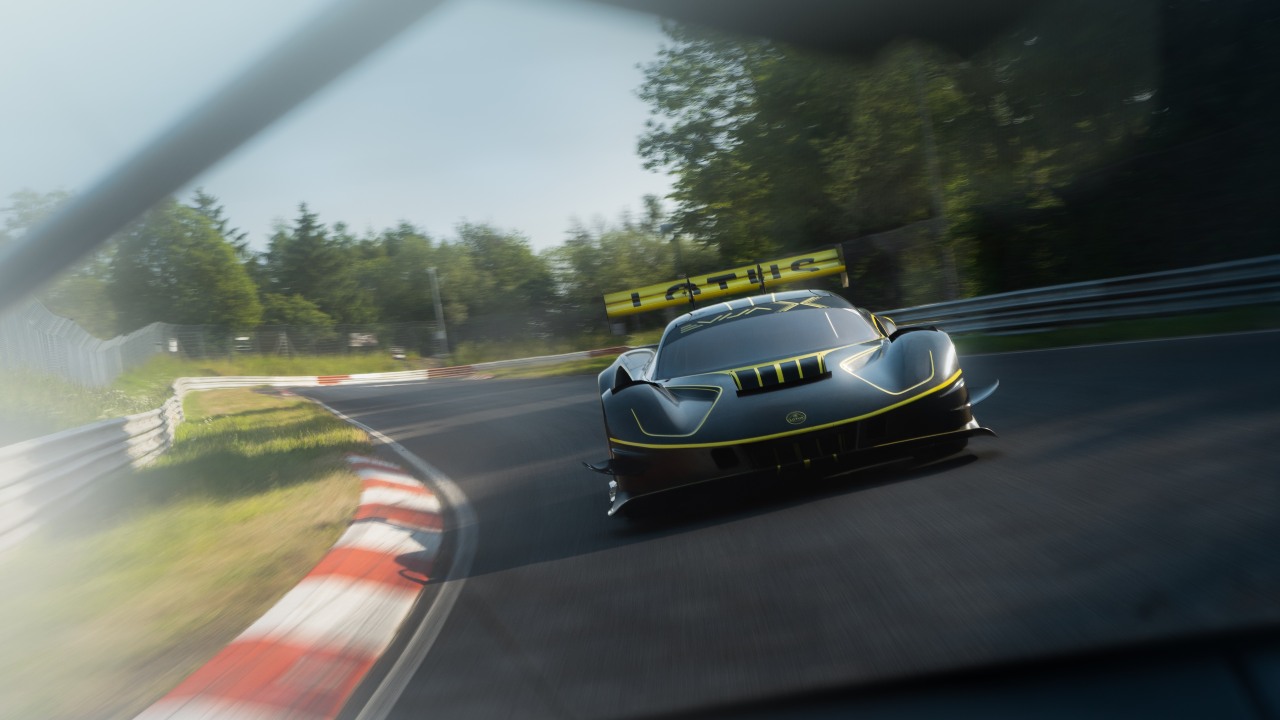
In October 2023, German racing driver Dirk Müller took the Evija X around the 12.9-mile Nürburgring Nordschleife in 6 minutes and 24.047 seconds — the third-fastest vehicle ever to lap the track in its current layout.
It came in more than 10 seconds faster than the Mercedes-Benz AMG One, the F1-engined machine that holds the record as the fastest street-legal car ever around the circuit. The Evija X beat it easily on a wet track, in a car built around a chassis it shares with a road-going hypercar.
Only two vehicles have lapped the circuit faster: the Volkswagen ID.R at 6:05 and the Porsche 919 Evo at 5:19, the current record-holder. Neither has any meaningful connection to a production car. That makes the Evija X the fastest-ever vehicle with a production chassis to complete the circuit.
Lotus believes the Evija X left time on the table — the run was recorded on a damp day, and the design team clearly believe there is more to come. Coyly refusing to be drawn on specifics, all they would say is: "Watch this space".
The 2,011bhp Experience
While the Evija X is a one-off technical showcase, the road-going Evija offers a vivid impression of what four electric motors and extraordinary grip deliver from the driver's seat.
The battery cells all sit behind the passengers in a pyramid-shaped stack, designed to evoke the cockpit-forward feel of a Group C racer.
The centre of gravity is lower than an Evora's, and all that mass is concentrated in the middle rather than spread across the axles. The effect on handling is immediate: the car changes direction on a pin.
The cabin deliberately avoids the oversized luxury screens common in modern hypercars. Lotus wanted the cockpit to feel more like strapping into a single-seat racer than entering a digital lounge. That is why the F1-style rectangular steering wheel carries many of the core controls directly within thumb reach, including those for the various driving modes. The Range, City, Tour, Sport and Track modes progressively sharpen the car's character. In Track mode, the Multimatic-supplied adaptive dampers move to firmer control for higher speeds, the rear wing deploys and DRS is available at the touch of a button.
Brace yourself for this: from standstill to 186mph takes just over nine seconds. The sprint from 124 to 186mph takes roughly half the time a Bugatti Chiron needs to reach 124mph from rest. Nothing on a production platform comes close.
Where it Fits in Lotus History
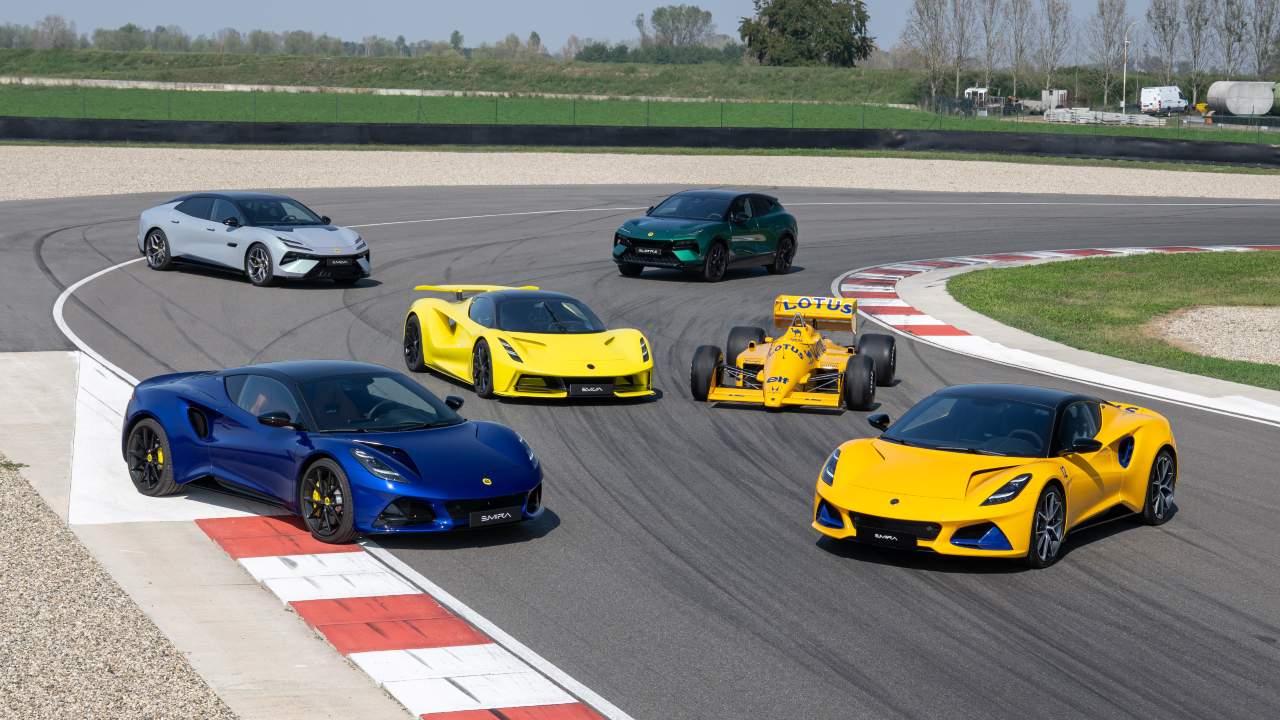
For all its radicalism, the Evija X is entirely consistent with Lotus at its most ambitious. Colin Chapman's great insight was that performance came from reducing mass, not adding power. The Evija appears to contradict that philosophy with over 2,000bhp, yet Lotus engineers argue the car still follows Chapman's logic through obsessive aerodynamic efficiency, torque vectoring intelligence and lightweight carbon construction.
The Evija family also extends beyond the X. The Evija Fittipaldi is a special edition of just eight cars paying homage to Emerson Fittipaldi, the Brazilian double World Champion. This edition references one of the most important cars in Lotus history: the Type 72. Its black-and-gold livery mirrors the John Player Special Formula 1 car that carried Emerson Fittipaldi to the 1972 world championship. It is a reminder that Lotus's motorsport DNA runs through the history of the sport itself.
The Evija, in all its forms, is therefore both a beginning and the next chapter. The series-production hypercar can only smash through the 2,000bhp barrier once, and Lotus did it first. The Evija X then asked what would happen if the road-legal constraints were removed entirely. The answer is a Nürburgring lap time that sits above every production-connected car ever built.
Frequently asked questions
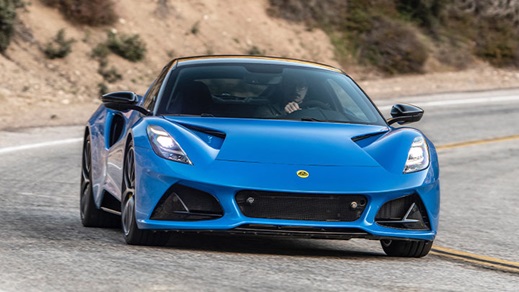
The road-going Lotus Evija is priced at approximately two million pounds, placing it among the most expensive production cars ever offered to the public. The Evija X itself is a track-only, one-off machine built by Lotus Advanced Projects in partnership with Multimatic and is not available for purchase in the conventional sense. If you like the design style and passionate driving feel the Evija presents then the Emira might be an option to consider, featuring similar stylings and performance rivalling Porsche 718 and fellow brit the Aston Martin Vantage.
The standard Lotus Evija can be driven legally on public roads across the UK and most of Europe, though it is not currently approved for road use in the United States. The Evija X is an entirely different proposition: a track-only machine with no road certification, designed exclusively for the circuit.
Lotus claims a top speed of 217mph for the road-going Evija, with 0 to 62mph in under three seconds and the sprint from standstill to 186mph completed in just over nine seconds. The Evija X, stripped of road-legal constraints and riding on Pirelli racing slicks, operates in a different realm entirely — though Lotus have yet to publish an official top speed figure for the track-only prototype.
Start Your Lotus Story with Stratstone
The Evija X lives at a level most of us will encounter only through a screen or from behind a barrier at a circuit. But Lotus' commitment to the driver — to cars that think, feel, and respond in ways other manufacturers simply don't replicate — runs through everything they build.
If the Evija X has sparked a interest in Lotus and their range of cars, Contact your local Stratstone Lotus Retailer today to discuss the Lotus that suits you.