What are the Fastest Mercedes-Benz Models?
03rd Jun 2026
By Edward Cook

Mercedes-Benz's obsession with speed predates every car on this list by many decades. In 1938, a specially prepared W125 set a land speed record of 268.9mph on a public autobahn near Frankfurt, with the radiator packed with ice just to survive the run. This is a record that stood for almost 80 years.
Speed used to mean brute force. Now it means software, aero and electrification. A list like this doubles as a history lesson: compare the naturally aspirated CLK GTR Super Sport with the hybrid AMG One. That is three decades of performance evolution, right there.
From road cars built to satisfy a racing rulebook to a hypercar that essentially transplanted a Formula One powertrain into something you could theoretically drive to the shops, Mercedes-Benz has never lacked ambition when it comes to performance. The brand's high-performance division, Mercedes-AMG, has been responsible for many of the most potent entries on this list, although, as you will discover, not all of them.
For ranking purposes, top speed is our deciding metric. It is the most objective and defensible measure of outright pace. Acceleration figures tell one story; the number on the speedometer tells quite another. With that settled, here are the five fastest road-legal Mercedes-Benz models ever produced — counting down from fifth to first.
- Mercedes-AMG SLS Black Series - 197mph
- Mercedes-AMG GT Black Series - 202mph
- Mercedes-Benz SLR McLaren Stirling Moss - 217mph
- Mercedes-AMG One - 219mph
- Mercedes-Benz CLK GTR Super Sport - 230+mph
Mercedes-AMG SLS Black Series — 197mph
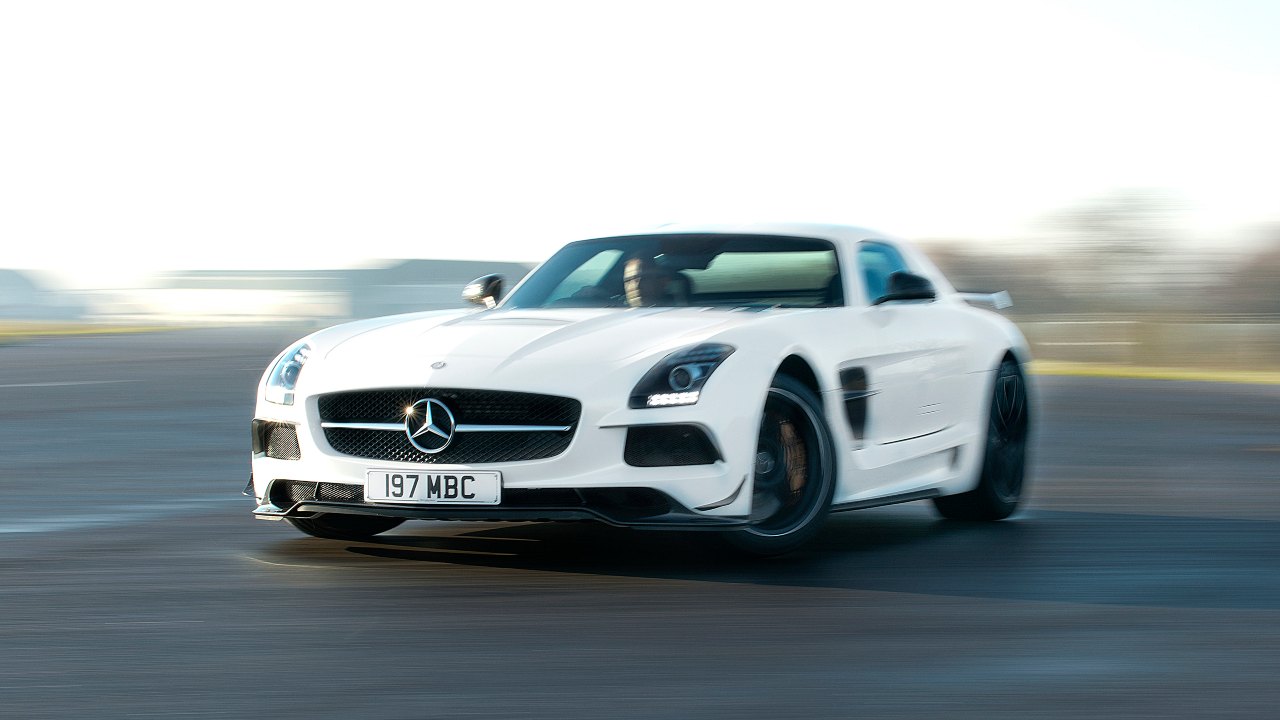
The standard SLS AMG was already a spectacular car with gullwing doors, a naturally aspirated 6.2-litre V8, and proportions drawn with performance rather than practicality in mind. Then AMG decided it was not quite spectacular enough.
The SLS AMG Black Series was launched in 2013. The engineering department had created the most powerful naturally aspirated V8 of any production car in the world — a title it held until the Chevrolet Corvette C8 Z06 arrived. There is something quietly remarkable about a German grand tourer temporarily outgunning the entire planet.
Power rose to 622bhp. This is achieved not through turbocharging or electrification, but through sheer mechanical development: revised cylinder heads, a higher compression ratio, a new intake system and an 8,000rpm redline.
The result is 197mph and 0 to 62mph in 3.6 seconds. But the numbers, as is so often the case with Black Series models, slightly miss the point. Developed alongside AMG's GT3 racing programme, the road car reflects that lineage in everything from its adjustable suspension to its carbon ceramic brakes and aggressive aero.
Every engine was hand-built by a single technician at AMG's Affalterbach facility, each carrying a badge bearing that engineer's personal signature — a fitting tribute to the last great naturally aspirated AMG V8.
Mercedes-AMG GT Black Series — 202mph
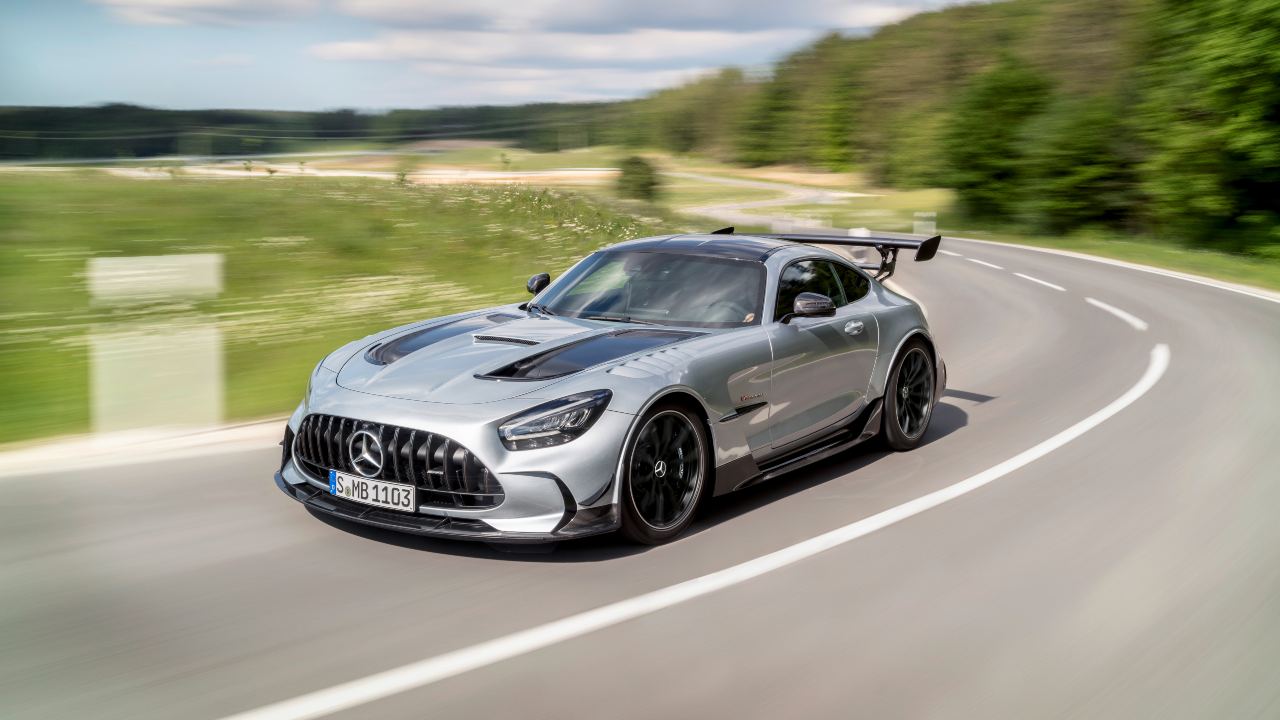
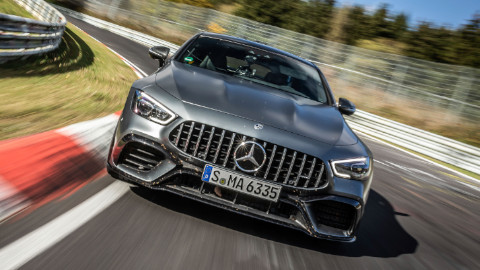
If the SLS Black Series represented the end of one era, the AMG GT Black Series arrived in 2020 as a statement of intent for the next. Where its predecessor relied on natural aspiration and mechanical purity, the GT Black Series deployed a 4.0-litre twin-turbocharged V8 producing a deeply unsettling 720bhp.
The numbers are staggering. Zero to 62mph in 3.2 seconds. Top speed is 202mph. But what separates this car from a straightforward exercise in attaining maximum power is the engineering thoroughness applied everywhere else. The aerodynamics package — that vast rear wing, the prominent front splitter, the vented bonnet — is designed to generate performance-defining downforce.
In 2020, the GT Black Series went to the Nürburgring and returned with the production car lap record — 6 minutes 43.616 seconds, more than a full second faster than the Lamborghini Aventador SVJ it displaced. Crucially, the AMG GT achieved this on standard factory parts, with engineers simply maximising the car's adjustable chassis and aero settings.
The engine itself is a bespoke flat-plane crank unit derived from the AMG GT3 racing car, which tells you something about the direction of travel. This is not a road car with racing pretensions. It is a racing car that has been persuaded, reluctantly, to tolerate public roads.
Only 700 were produced worldwide, making the GT Black Series as rare as it is extreme.
Mercedes-Benz SLR McLaren Stirling Moss — 217mph
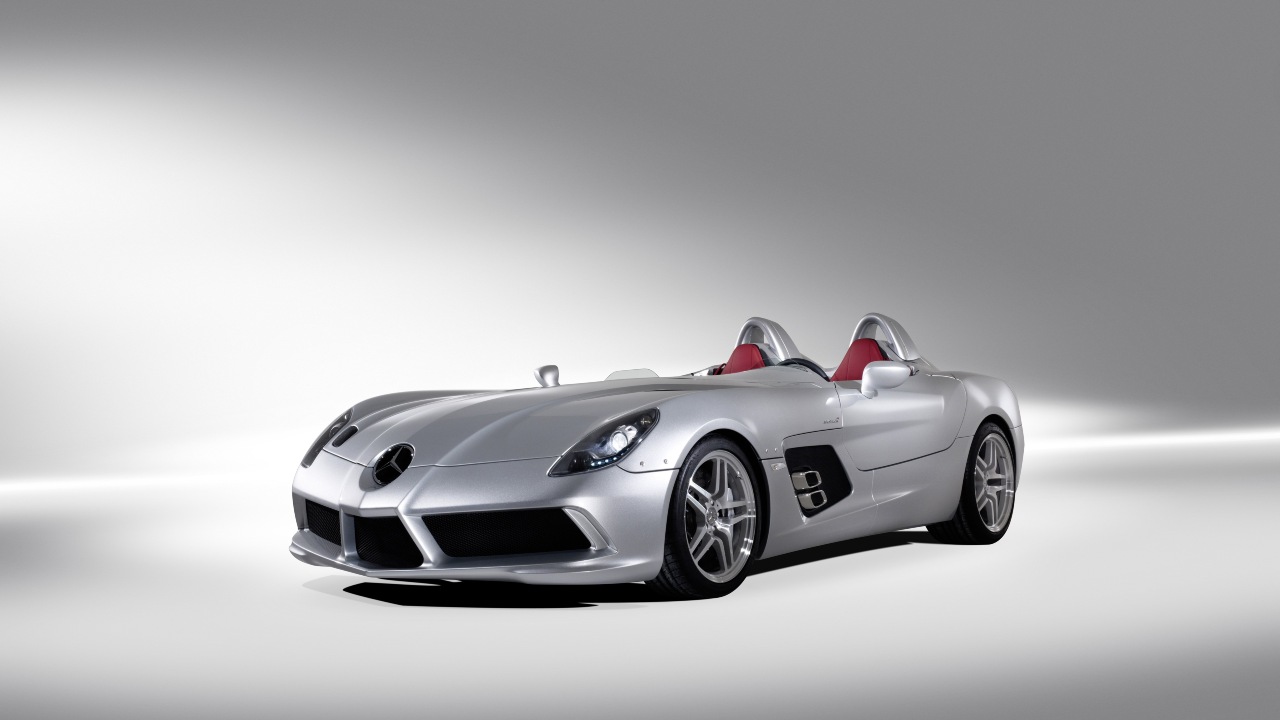
Some cars carry the weight of history more gracefully than others. The SLR McLaren Stirling Moss carries it with the kind of effortless authority that could only come from being named after one of the greatest racing drivers who ever lived.
Sir Stirling Moss needs little introduction to anyone with a passing interest in motorsport. His 1955 victory in the Mille Miglia, piloting a Mercedes-Benz 300 SLR over nearly 1,000 miles of Italian public roads in a time that has never been beaten, remains one of the most celebrated achievements in racing history. Moss described his Mille Miglia victory as the finest of his 197 professional wins, putting it above all of his Formula One successes. With only 75 ever produced, the SLR McLaren Stirling Moss was conceived as a tribute to that car, that driver and that moment.
This is a road-legal, open-top speedster featuring a 5.4-litre supercharged V8 producing 641bhp. The 0 to 62mph figure is just over three seconds. The top speed is 217mph, and — this detail never loses its power to surprise — there is no windscreen. The Stirling Moss edition is an open car, in the purest possible sense of the word. Helmet and goggles are not accessories. They are essential.
The car cost around £700,000 upon launch. Values have since risen considerably, as tends to happen when you combine extreme rarity, an extraordinary story and the name of a legend. If you want one today, you will need both patience and a telephone number budget. You will also, it bears repeating, need a helmet.
Mercedes-AMG One — 219mph
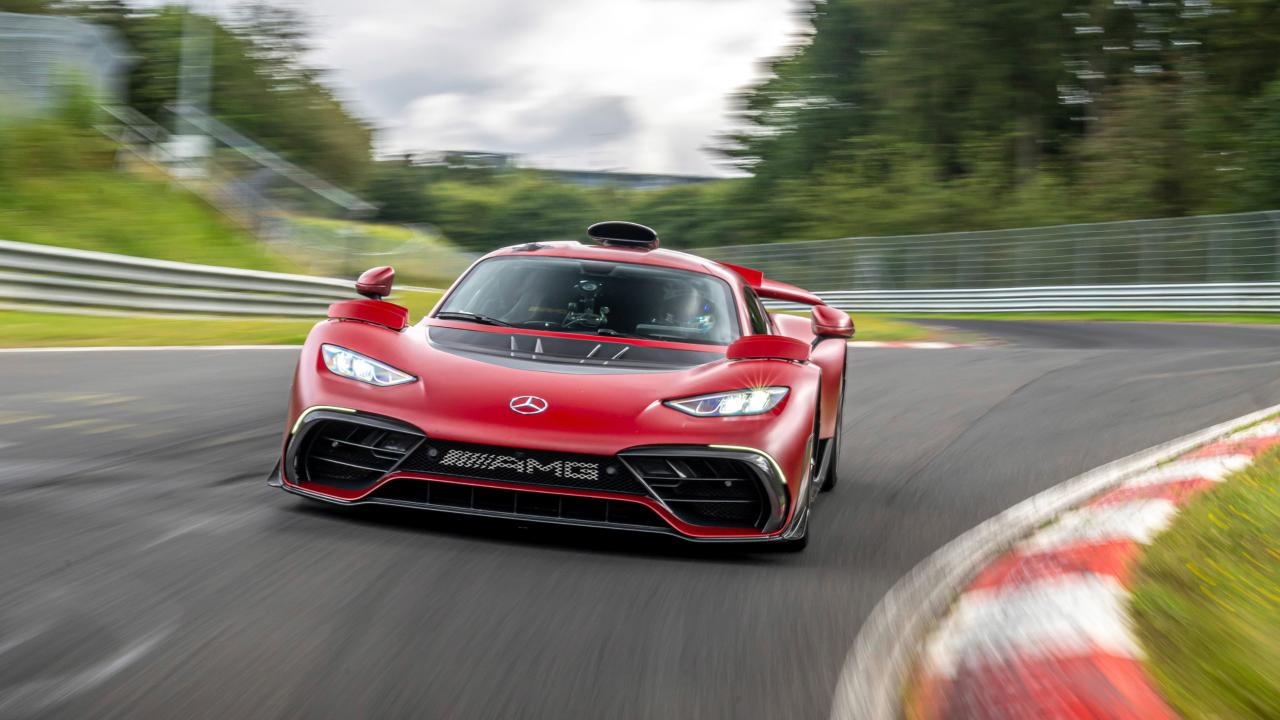
The powertrain at the heart of the AMG One is not inspired by Formula One technology. It is not loosely derived from Formula One technology. It is, with modifications necessary to pass road-going regulations, the actual hybrid power unit from Mercedes-AMG's championship-winning F1 cars. A 1.6-litre turbocharged V6 paired with four electric motors, with one on the crankshaft, one on the turbocharger, and one on each front wheel, producing a combined output in excess of 1,000bhp.
The result is a car that reaches 62mph in 2.9 seconds and has a top speed of 219mph. Those are remarkable numbers, but the AMG One is even more remarkable for what it represents: the transfer of the most advanced hybrid racing technology on earth into a road-registered car. This is either an extraordinary achievement or a magnificent waste, depending on your perspective.
The aerodynamics are active and sophisticated. The carbon fibre construction is relentless. The development process, which took considerably longer than originally planned owing to the sheer complexity of making an F1 engine emissions-compliant, stretched the patience of all involved.
Only 275 cars were built, each priced at around £2.5 million. Most will spend their lives in climate-controlled garages, which is both understandable and a shame. On track, the AMG One holds the production car lap record at several circuits. It is, by some measures, the most remarkable road car Mercedes-Benz has ever produced.
It is not, however, the fastest.
Mercedes-Benz CLK GTR Super Sport — 230+mph
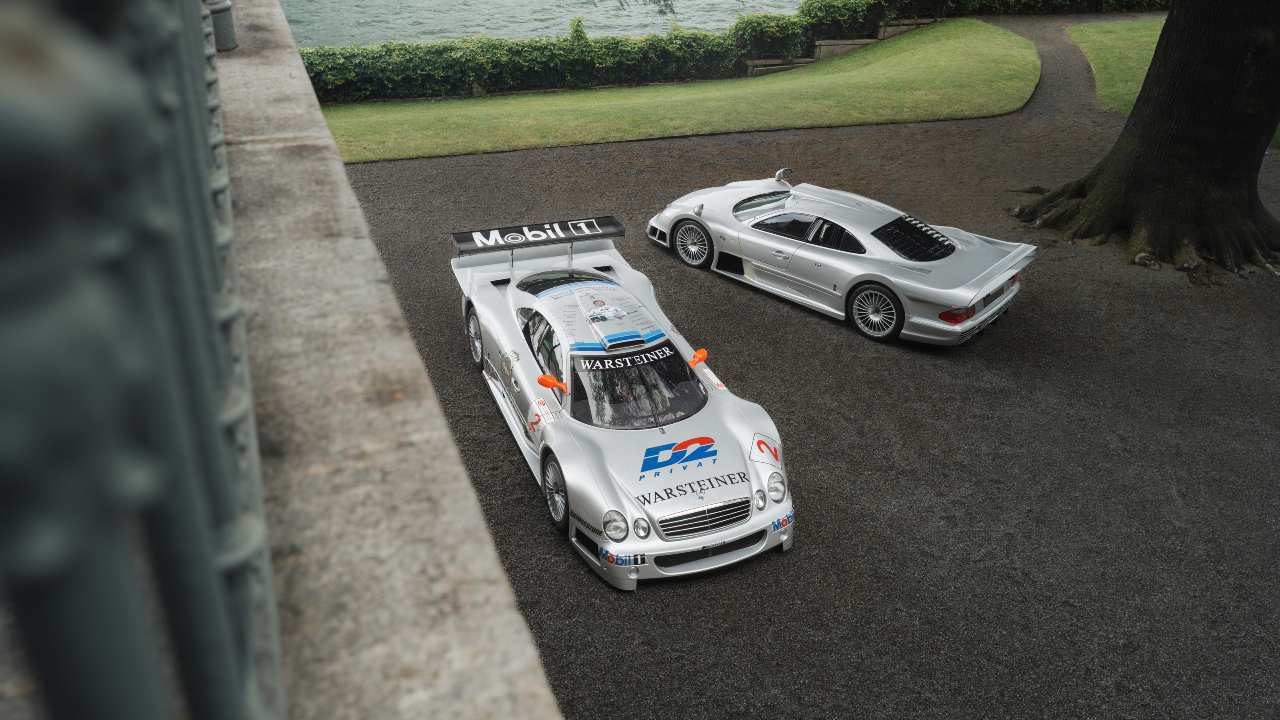
Here is a fact to consider: the fastest road car Mercedes-Benz has ever made was unveiled in 1997. It predates the smartphone. And it has never been beaten for outright top speed by anything wearing a three-pointed star.
The CLK GTR was built for a very specific reason. To race in the FIA GT Championship of the late 1990s, Mercedes-Benz was required to produce a road-going version of its racing car. The rules demanded a minimum of 25 examples. Mercedes built 20 coupes and six roadsters. They were extraordinarily expensive and extraordinarily fast.
The standard CLK GTR featured a 6.9-litre V12 producing 604bhp, delivering a claimed 214mph and 0 to 62mph in 3.8 seconds. By 1997 standards, these numbers bordered on the surreal.
Then came the Super Sport.
In 2002, Mercedes released five CLK GTR Super Sport cars, each featuring a revised 7.3-litre version of that V12. Power rose accordingly, and the claimed top speed climbed to well in excess of 230mph. Given that only five were ever produced and primary documentation is as rare as the cars themselves, the exact figure remains the subject of healthy debate. What is not in dispute is that the CLK GTR Super Sport is the fastest road-legal Mercedes-Benz ever built.
There is something wonderful about its position at the top of this list. In an age of turbocharged hybrid hypercars with four-figure power outputs and active aerodynamics, a car built to satisfy a 1990s racing regulation remains the fastest Mercedes-Benz road car ever produced.
Whether that record will stand much longer is another matter. Mercedes-AMG has confirmed that a new GT Black Series is currently in development. AMG management describes this as the most extreme Black Series ever produced, but performance specifications have not been announced at the time of writing. Watch this space.
Fast Mercedes-AMG Models You Can Actually Buy
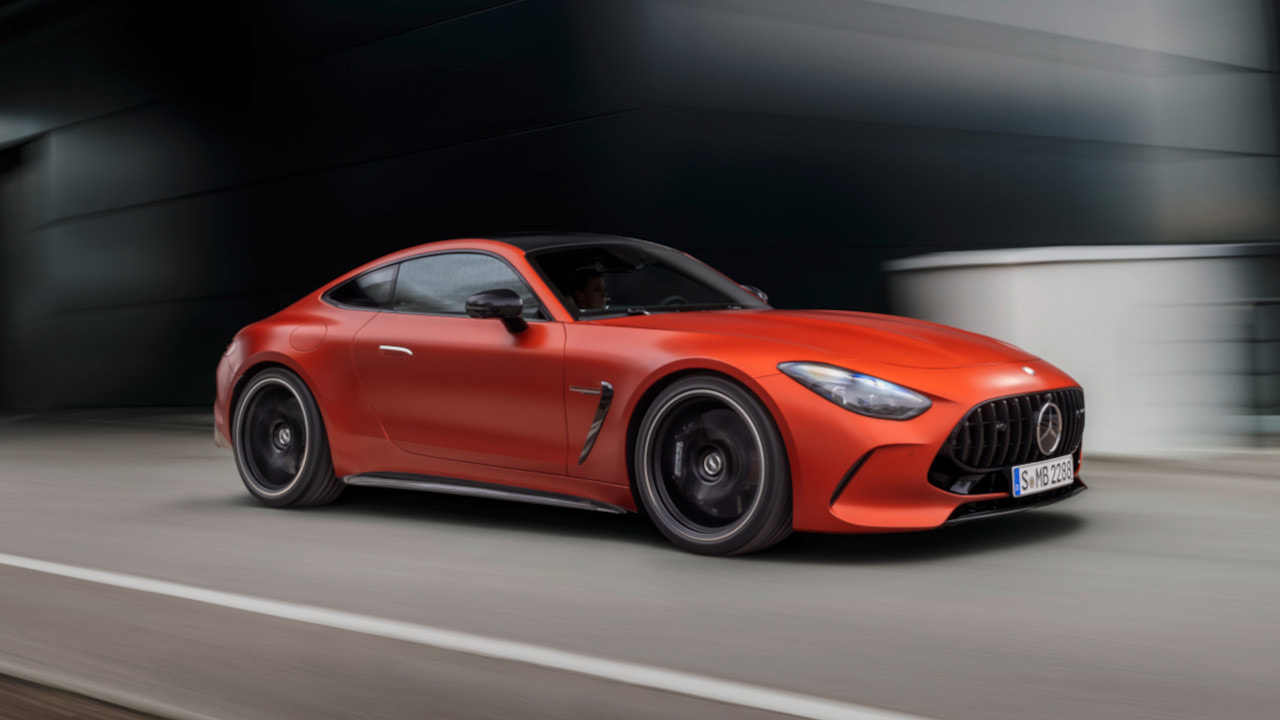
The five cars above occupy a world of their own: rarefied, largely unobtainable, and best experienced at a respectful distance. The current Mercedes-AMG range, however, offers performance that is genuinely accessible and, in everyday driving conditions, every bit as startling.
- Fastest accelerating: The Mercedes-AMG GT 63 S E Performance Coupe reaches 62mph in 2.7 seconds, making it the quickest-accelerating series production AMG ever built — fractionally ahead of every car on this list from a standing start.
- Most practical rocket: The Mercedes-AMG GT 63 4-Door Coupe covers the same sprint in 2.4 seconds. That it does so with four adults and their luggage on board is, frankly, absurd.
- Fastest SUV: The Mercedes-AMG GLC 63 S E Performance reaches 62mph in 3.5 seconds, which is remarkable for a family SUV that is equally at home on the school run.
The common thread across all three is AMG's hybrid V8 powertrain, which delivers performance that would have qualified as hypercar territory not long ago. The gap between the extraordinary and the everyday has never been smaller.
Experience Mercedes-AMG with Stratstone
The cars on this list represent the outer limits of what Mercedes-Benz has achieved in pursuit of performance — rare, extraordinary, and largely beyond the reach of everyday motoring. The current Mercedes-AMG range is a different proposition entirely: cars that can be ordered, delivered and driven on British roads tomorrow.
From the Mercedes-AMG A 45 S, with its ferocious 2.0-litre four-cylinder engine, to the hybrid V8 models highlighted above, the AMG line-up represents the most capable range of performance vehicles the brand has ever offered. With dealerships across the UK, Stratstone's Mercedes-Benz specialists are well placed to help find the model that suits you best.
Explore our current Mercedes-Benz new car offers, or visit our dedicated Mercedes-AMG section to discover the full range. Alternatively, browse the Stratstone blog for further features covering the world's most exceptional automotive marques.