Audi A3 vs Audi A4: Which is the Best?
21st Oct 2026
By Edward Cook

Choosing between an Audi A3 and an Audi A4 used to be a simple question of size and budget.
The comparison looks slightly different today. In 2024, Audi stopped selling the A4 saloon and estate in the UK and handed their role to the new A5, as part of a plan to give combustion-engined cars odd numbers and electric models even ones. Audi dropped that naming idea the following year, although the A5 has kept its position.
Existing A4 models have not disappeared, though. You will find tonnes of brilliant examples used, and for many buyers the outgoing generation remains excellent value against a brand-new A3. This comparison looks at design, practicality, technology, performance, safety and running costs to show where each car comes out ahead.
Quick Overview
- The A3 is Audi's compact hatchback and saloon, built on the smaller MQB platform shared with other Volkswagen Group models.
- The A4, Audi's mid-size saloon and estate, was replaced by the Audi A5 in 2024.
- Both cars offer petrol and diesel power, and the A3 adds a plug-in hybrid option.
- The A3 has the newer cabin technology and driver assistance systems of the two.
- The A4 offers noticeably more interior space and a larger boot, particularly in Avant estate form.
Design and Style
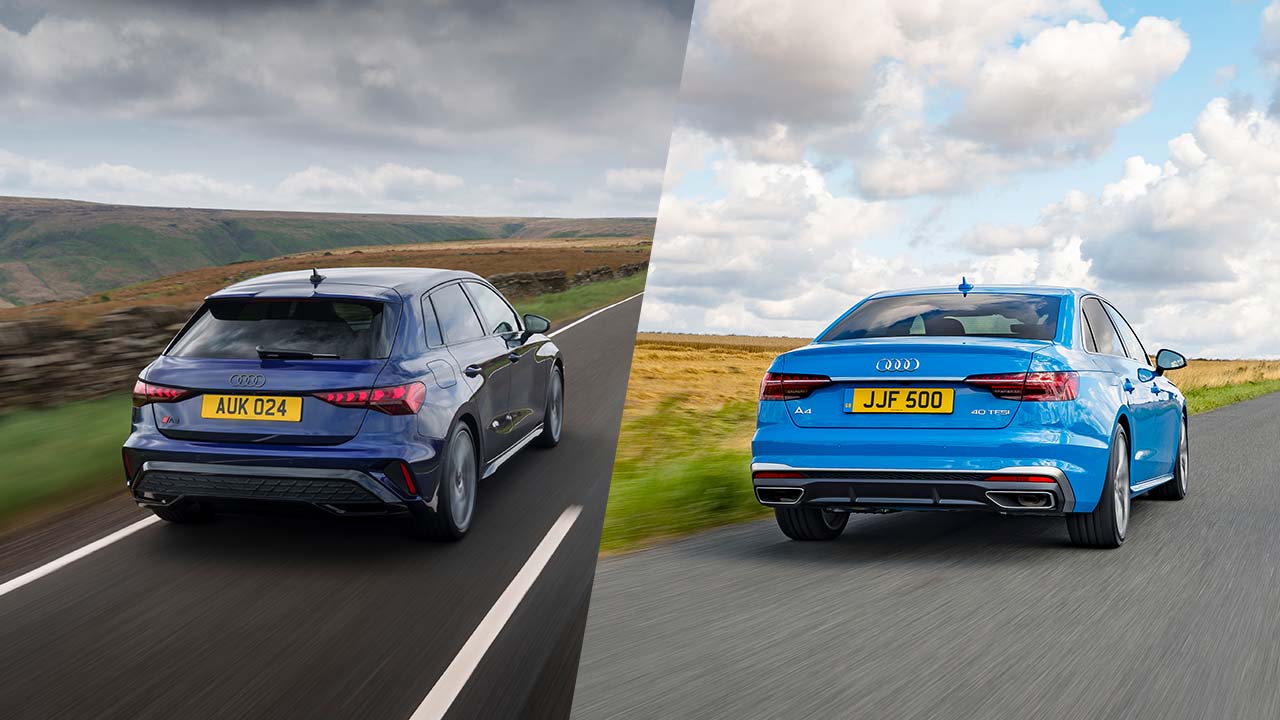
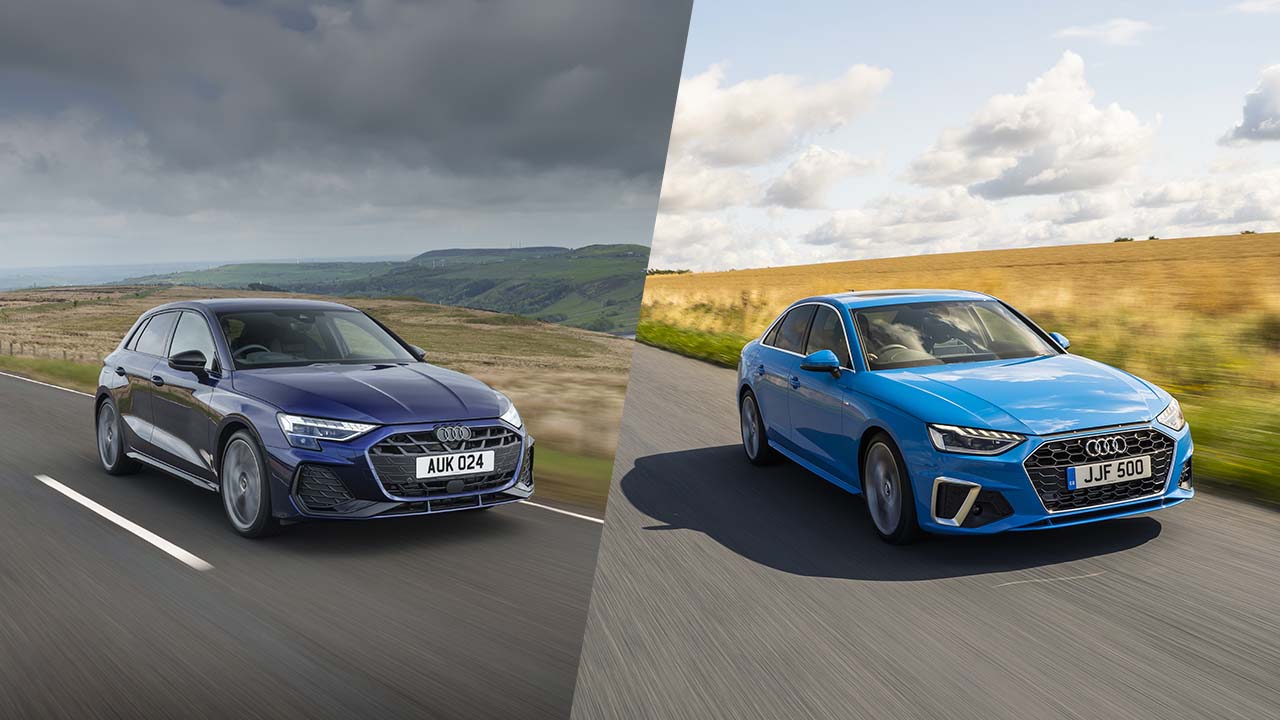
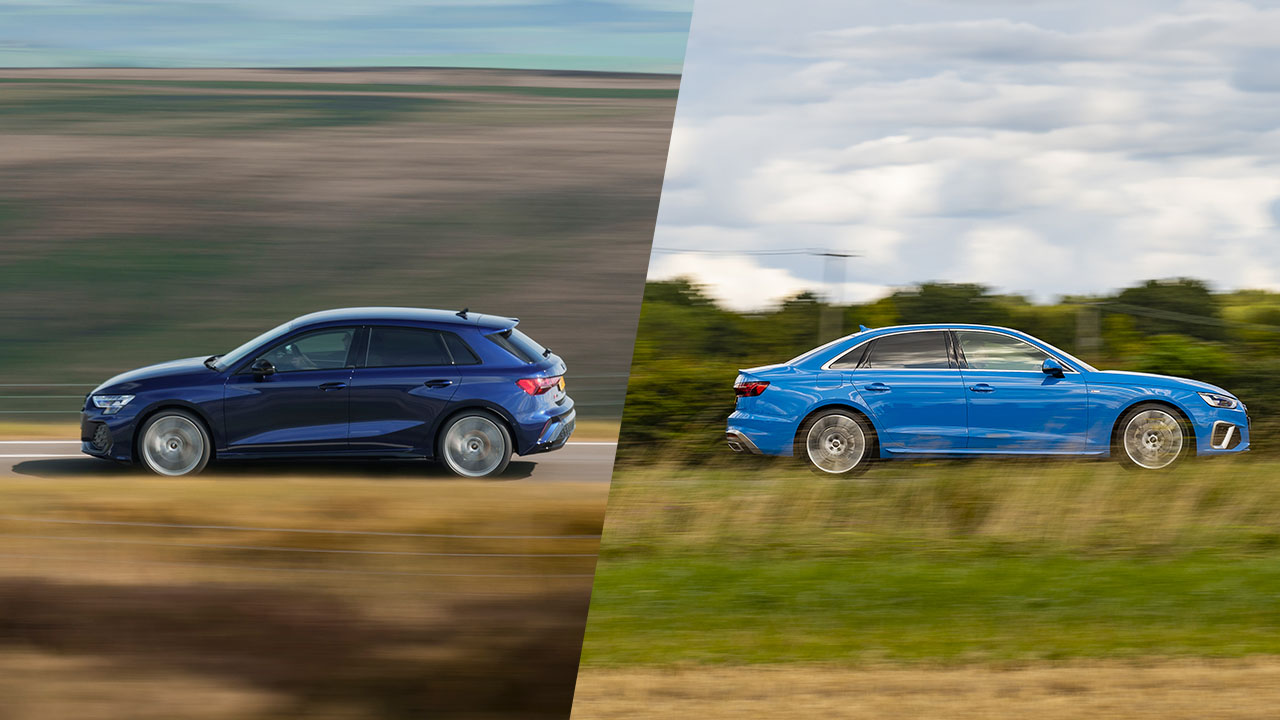
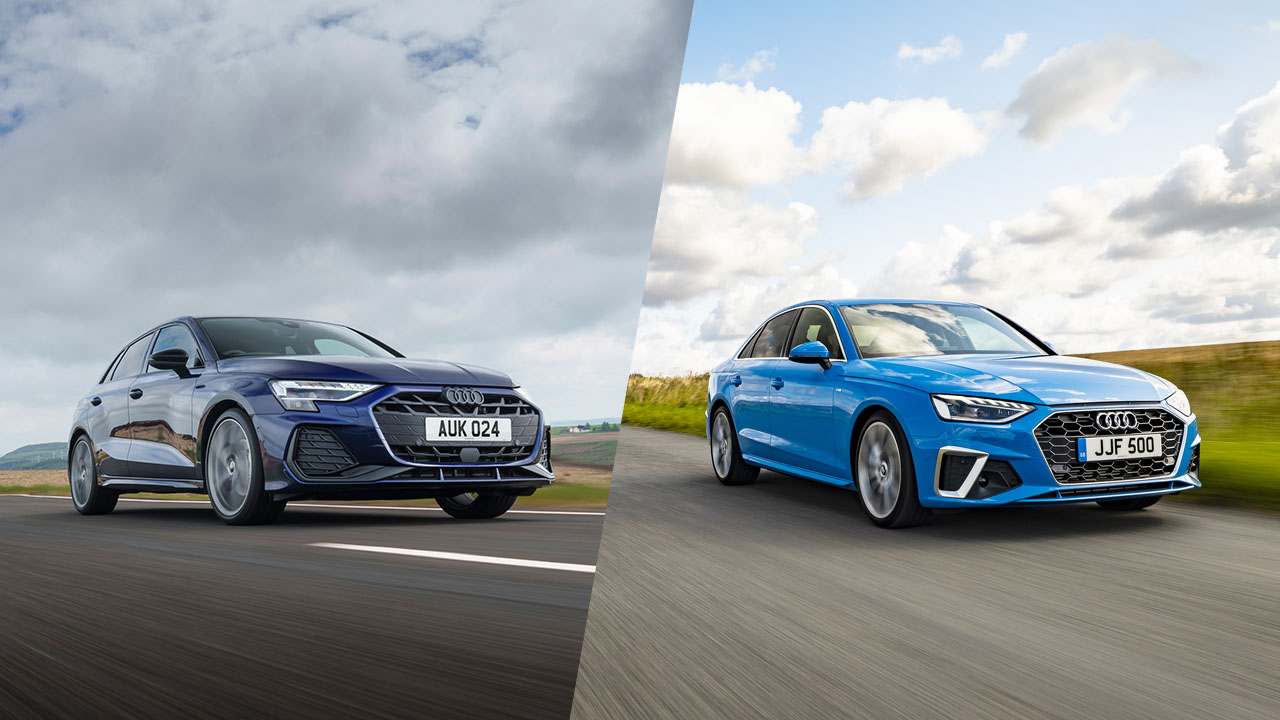
Audi had not built a small car for 18 years when the first A3 arrived in 1996. It brought the finish of a much larger executive car to a compact hatchback, and BMW did not have a direct rival on sale until the 1 Series arrived eight years later. The latest A3 comes as a five-door Sportback hatchback or a four-door saloon. Its stance is low and purposeful, with LED lighting signatures on either side of a wide single-frame grille. Inside, the dashboard curves gently towards the driver. Angled the same way, the main touchscreen is easy to reach on the move.
The A4 actually has the longer history, having taken over from the Audi 80 in 1994. Over the three decades that followed, it became a familiar sight in company car parks up and down the country. The final generation keeps a classic three-box saloon shape, alongside the longer-roofed Avant estate.
Practicality and Boot Space
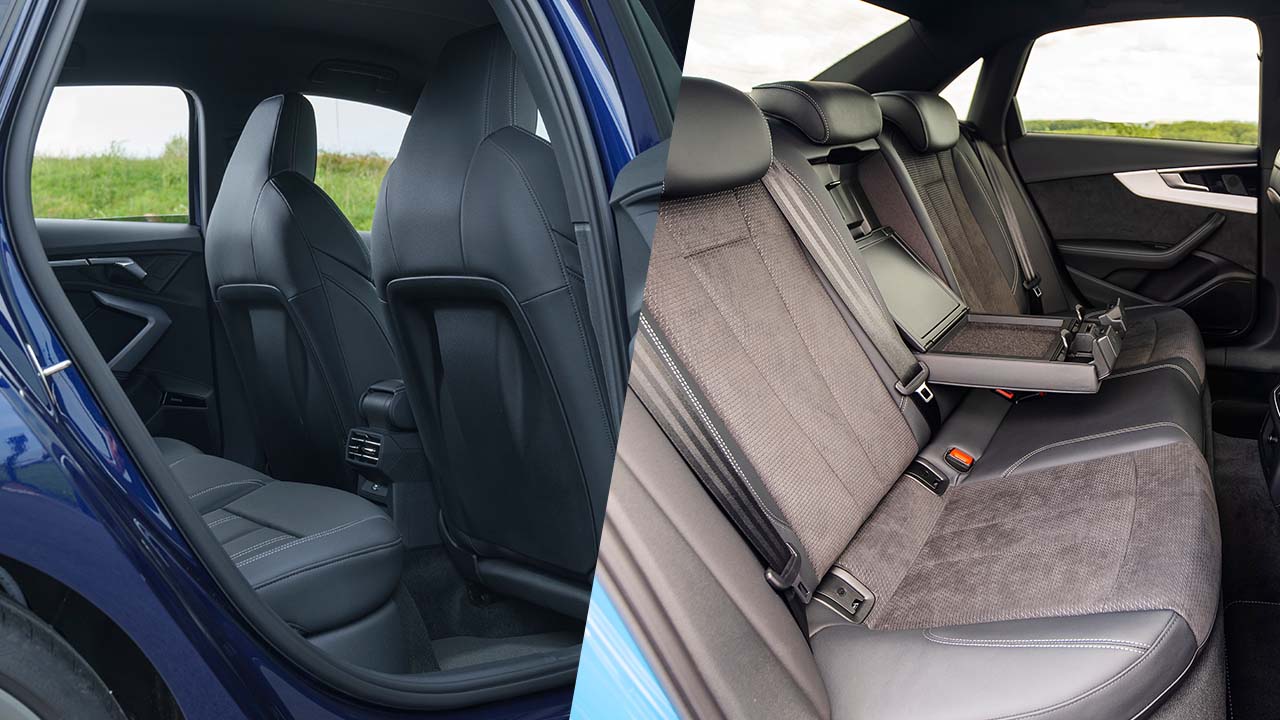
The A3 Sportback's 380-litre boot copes easily with a fortnight's luggage for two. Fold the rear seats and it opens up to 1,200 litres, enough to bring a flat-pack bookcase home in one trip. The saloon actually holds a little more with the seats up, at around 425 litres. Even so, the Sportback's wide tailgate opening makes it the better choice for anything bulky.
The A4 has grown by nearly 28cm in length since its 1994 debut, and the Avant's boot has increased by roughly a quarter over the same five generations. The saloon holds around 460 litres, and the Avant estate offers up to 1,510 litres with its rear seats folded, making it one of the more practical choices in this segment for anyone who regularly carries prams, bikes or sports equipment.
Rear legroom follows a similar pattern. The A4's longer wheelbase gives back-seat passengers more room than the A3 offers, and that extra space counts on motorway journeys.
Technology and Features
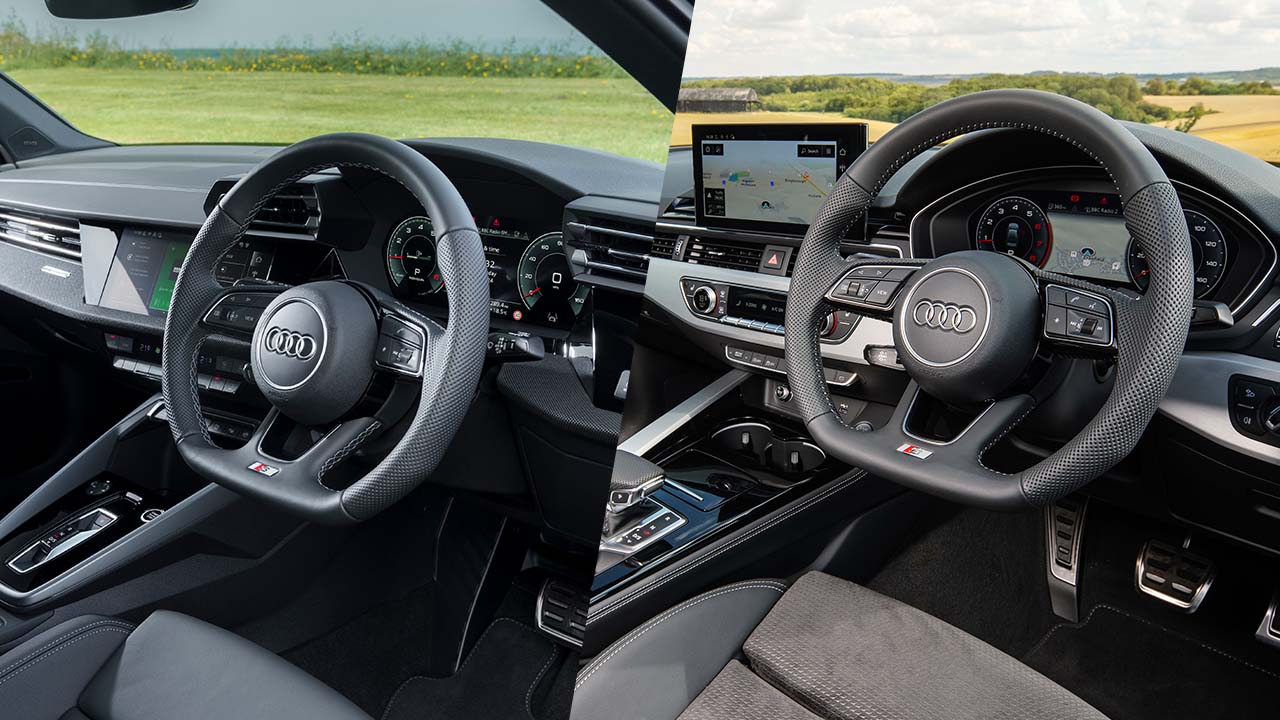
Compare the two cabins and the A3 has the edge. Audi's MMI system began life in 2002 on the flagship A8, controlled by a rotary dial, and has been quietly rewritten every few years since. The A4's last major update came with its 2019 facelift, while the A3 has been refreshed more recently, most notably with a 2026 update that brought new interior technology across the range. The A3 also comes with wireless Apple CarPlay and Android Auto as standard.
The A4 still offers a strong technology package for a car of its age, including a 10.1-inch central touchscreen, Virtual Cockpit and, on higher-specification cars, Matrix LED headlights that automatically dim sections of the beam to avoid dazzling other drivers.
Powertrains and Performance
Surprisingly, perhaps, quattro's all-wheel-drive origin has nothing to do with motorsport. Testing a Volkswagen military off-roader in the Scandinavian snow in the winter of 1976–77, Audi engineers were struck by its traction and adapted the same four-wheel-drive idea for a road car, launched in 1980. The system sends power to all four wheels rather than two, holding grip through wet, icy or loose surfaces, and quattro features in both ranges.
Most A3 buyers are not chasing outright pace. They are quite willing to stick with a turbocharged petrol for simplicity, though diesel remains the sensible pick for higher mileage, and a plug-in hybrid TFSI e version exists for anyone wanting a short stretch of electric-only running. When speed is the priority, the S3 and RS3 sit at the top of the range, both backed by quattro.
Diesel is where the A4 makes its strongest case. Buyers covering serious motorway miles keep returning to it, because it is one of the most relaxing cars in its class on a long run. Petrol remains on offer for anyone who would rather not fill up with diesel, and quattro is fitted through much of the line-up. Want more thrust? The S4 and RS4 are positioned above the regular range and provides sharper acceleration.
Safety and Reliability
Both cars carry a full five-star Euro NCAP rating, though the tests took place several years apart and assessment criteria have become considerably stricter since the A4 was evaluated. That does not mean the A4 is unsafe by any measure. It simply reflects how quickly safety technology has moved on across the industry.
Autonomous emergency braking is standard on both models, and lane-keeping assistance is fitted to most versions. Adaptive cruise control, blind-spot monitoring and parking assistance are available, depending on specification.
The engines and gearboxes in both cars have a strong track record, with many running well past 100,000 miles when serviced on schedule. On used models, a full service history is worth checking carefully, since a cambelt or S tronic gearbox issue is far cheaper to prevent than to put right; an area that is valid on both models, dependant on variant. Opting for a new A3 makes that a future consideration.
Price and Running Costs
The RS3 sits as high as insurance group 40, on par with some performance SUVs. Drop down to a modest entry-level A3 and that falls all the way to group 14, a gap of more than twenty insurance bands. This highlights that model name and body shape tell you little about what a car will actually cost to insure.
Choose the smallest engine in the A3 range and fuel bills drop with it, helped along by newer emissions technology that keeps running costs modest. A used A4 usually costs less to buy than an equivalent new A3, which helps offset its slightly higher fuel and servicing bills.
Load up an A4 with the biggest engine and quattro, and running costs climb faster than anything in the mainstream A3 range. Otherwise, servicing intervals and parts prices are close. That is because both cars use many of the same engines. What actually determines which car is cheaper to own is mileage and use, not the badge on the boot lid.
Which One Should You Buy?
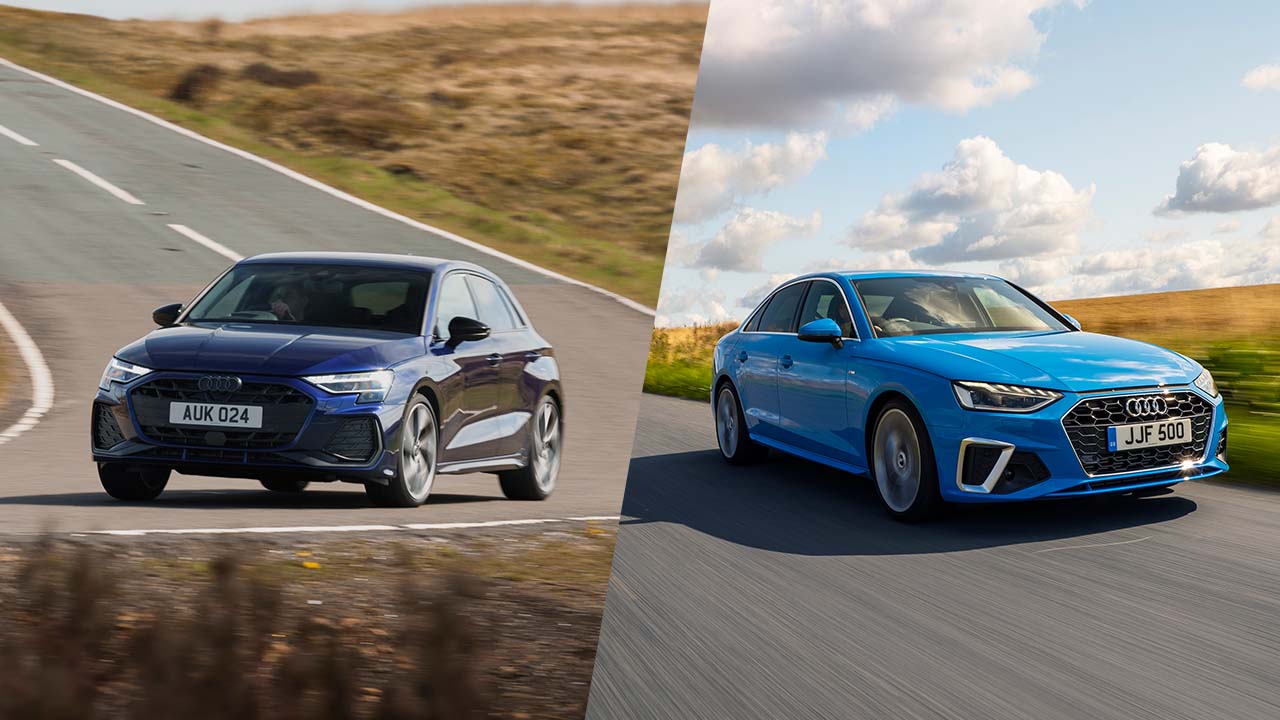
Picture a busy town-centre car park on a Saturday morning, where the last free space lies between a concrete pillar and a carelessly parked SUV. The A3 slips into it without a second thought. Whether that moment matters more than cabin space on a long journey is really what this decision comes down to.
The A3 has the more up-to-date technology of the two, all in a compact package that makes light work of city streets. Younger drivers and smaller families will get the most from it, particularly on the shorter everyday journeys where its updated safety systems are put to best use.
The A4 comes into its own about an hour into a motorway run, when its larger cabin and relaxed diesel engines make the miles pass effortlessly. For a sales manager covering 25,000 miles a year, that is worth more than any amount of screen technology. Growing families have a different reason to look at it, because the Avant estate's 495-litre boot swallows a pushchair and the weekly shop with room to spare. A3 owners wanting a noticeably bigger car, without stepping up to a full executive model, will find it a natural next step.
Neither car is the outright winner, so the perfect choice is simply the one that suits the driving you do most often.
Frequently asked questions
The Audi A3 is Audi's compact hatchback and saloon, while the Audi A4 sits a size class above as a mid-size saloon and estate. The A4 offers extra interior space and a larger boot, although the A3 has the more up-to-date cabin technology.
The Audi A4 is no longer sold new in the UK. Audi ended sales in 2024, after 30 years in which the car had been one of its best-known models, and the A5 now fills its role. Approved used A4 saloons and Avant estates are still easy to find. Cars from the final years of production, which benefit from the 2019 update, represent particularly strong value against the latest A5.
The Audi A4 is more practical than the Audi A3, with a saloon boot of around 460 litres against the 380 litres of a petrol or diesel A3 Sportback. Its longer wheelbase also gives rear passengers a roomier back seat. The A4 Avant estate stretches the boot advantage further still, with around 495 litres.
The S3 and RS3 performance models come with quattro all-wheel drive as standard, while most other A3 versions are front-wheel drive.
The Audi A5 replaced the A4 as Audi's mid-size saloon and Avant estate. The switch followed a plan to give petrol and diesel models odd numbers and reserve even numbers for electric cars. Audi later dropped that idea, although the A5 has kept its new name. Compared with the A4, the new A5 is slightly larger, with a sleeker liftback-style body and Audi's latest dual-screen cabin technology.
Try Both Before You Decide
A short drive in each car usually settles the question of which is better within the first few miles. Stratstone offers the latest Audi A3 range alongside a choice of approved used A4 models, so comparing the two side by side is easy to arrange.