Jaguar's story did not begin with a sports car. William Lyons was only 21 when he co-founded the Swallow Sidecar Company in 1922 with William Walmsley, making motorcycle sidecars before moving into coachbuilding in the late 1920s.
Since those early days, Jaguar has repeatedly redefined what a luxury car could be: racing technology moved into road cars, the range grew from saloons and sports cars into SUVs, and it is now pursuing an all-electric future. Standing still has never been Jaguar's style.
This account follows the story from its origins in Blackpool to the new era, and picks out the most noteworthy cars and significant turning points along the way.
When did Jaguar start making cars?
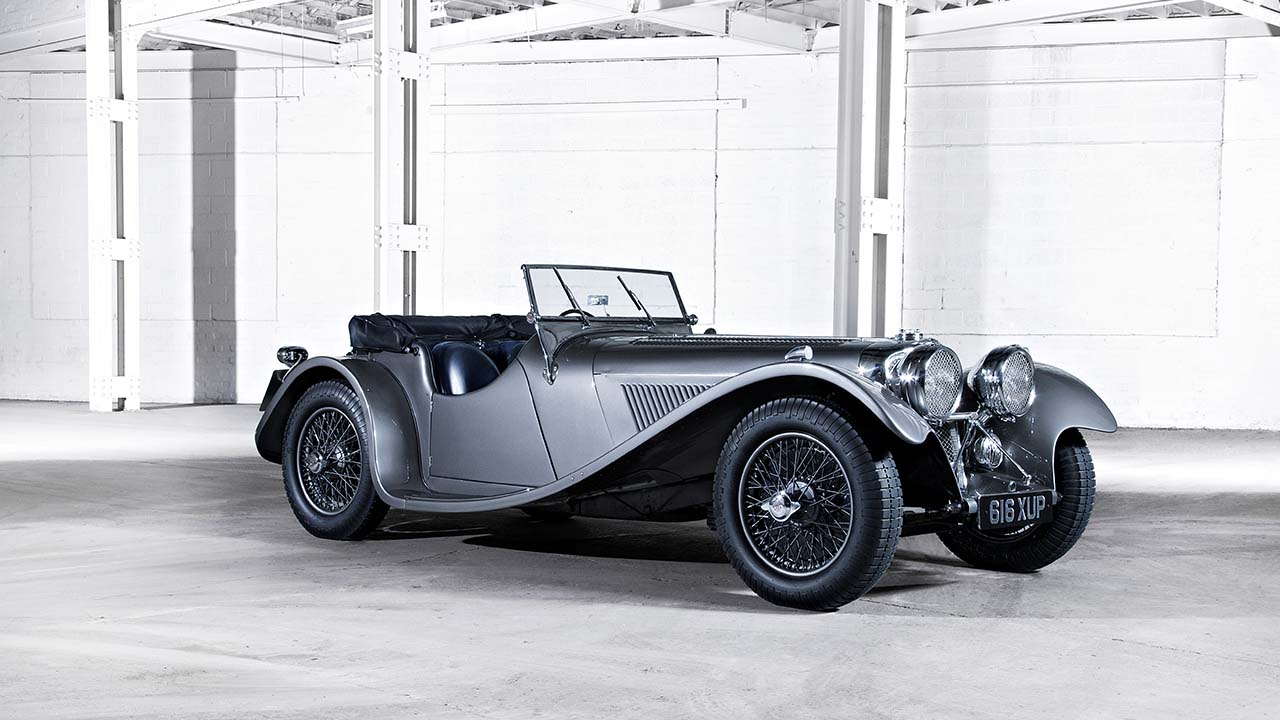
Jaguar's roots as a car maker date from the early 1930s, when Lyons began building cars under the SS name, with bodies styled under his direction and fitted to Standard Motor Company chassis.
Swallow's first big success had come earlier, with an open two-seater body for the Austin Seven, and London motor trader Henlys ordered 500 of the finished cars. That was far more than the Blackpool works could build in good time, so in 1928 Lyons moved the business to Coventry, closer to the heart of the British car industry.
The Jaguar name first appeared in September 1935, on the SS Jaguar 2½-litre saloon. Car production then ceased in 1940, during the Second World War.
Post-war Jaguar: the XK120 and Le Mans wins
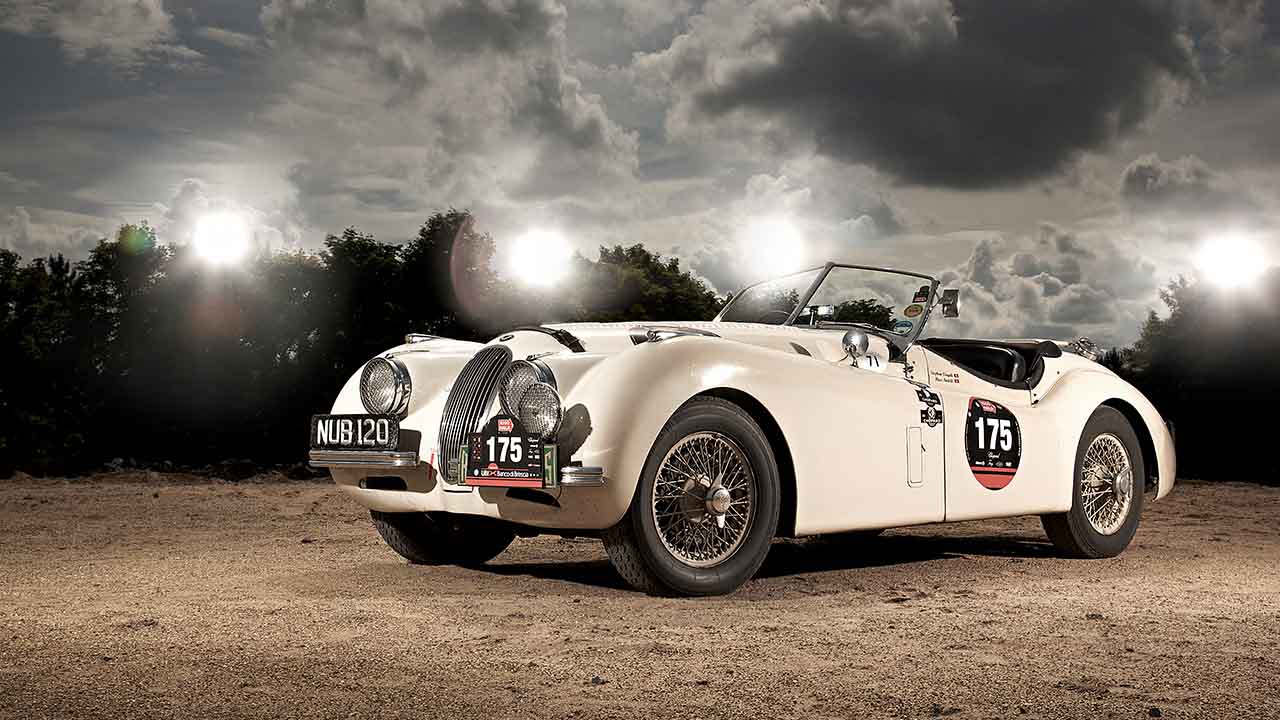
In March 1945, with the war drawing to a close, SS Cars made the Jaguar name official for the whole company, becoming Jaguar Cars Limited ahead of the return of car production.
The model that introduced the reborn company to the world was the XK120, unveiled at the London Motor Show in October 1948. Its 3.4-litre twin overhead camshaft straight-six was designed under chief engineer William Heynes, and the 120 in its name was the claimed top speed in miles per hour. This made it the fastest production car in the world at the time.
In 1949, an XK120 was officially timed at more than 132mph in a controlled record run in Belgium. Success on the track followed quickly. The C-Type won the Le Mans 24 Hours in 1951 and 1953. The 1953 win was the first for a car with disc brakes, which enabled the C-Types to brake much later than their more powerful rivals. Other manufacturers took note, and discs began appearing on production cars soon afterwards.
The D-Type then secured victory at Le Mans in 1955, 1956 and 1957, with the last two wins going to the Scottish team Ecurie Ecosse. A road-going descendant, the Jaguar XKSS, appeared in 1957 and remains one of the most coveted cars the marque has ever produced.
Daimler, the Jaguar E-Type and British Leyland
Growing demand left Jaguar short of factory space, and in 1960 Lyons bought the Daimler Company from BSA. The Daimler purchase secured the Radford plant in Coventry and one of the oldest names in British motoring.
William Heynes, Jaguar's engineering director, learned of the takeover from a BBC radio news bulletin while shaving one morning. Lyons and BSA's Jack Sangster had settled the deal without telling the Jaguar board.
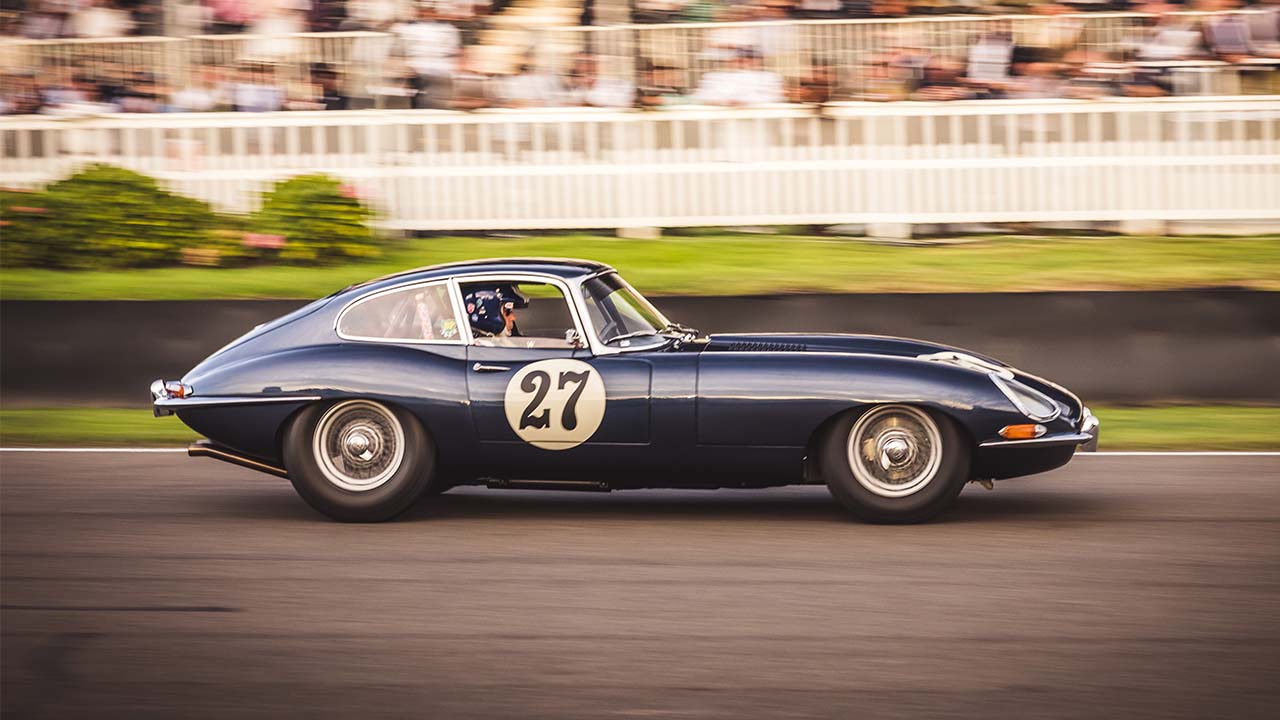
The following year, the iconic E-Type made its debut with a claimed top speed of 150mph and a 3.8-litre straight-six producing 265bhp. Enzo Ferrari is often said to have called it the most beautiful car ever made, although the remark has never been verified. About 72,000 were built before production ended in 1974.
In 1966, Jaguar joined British Motor Holdings, which became part of British Leyland in 1968, and the XJ6 arrived that September as the last new saloon developed under Lyons.
Jaguar under Ford ownership
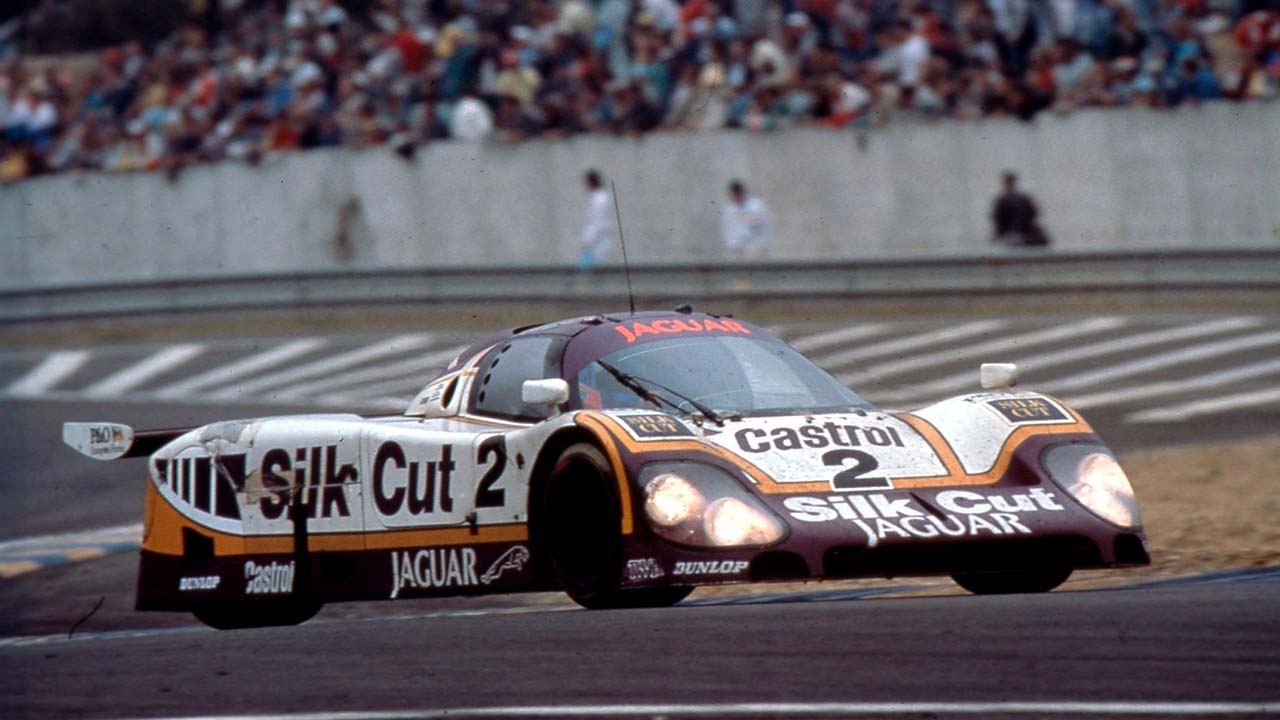
By the end of the 1970s, Jaguar was struggling within British Leyland, and John Egan became chairman in 1980 to rescue it. Under his leadership, the business recovered enough to regain its independence in July 1984, when it was floated on the London Stock Exchange as a separate company. Success at Le Mans returned soon afterwards. The XJR-9 won in 1988, the first Jaguar victory there since 1957, and the XJR-12 won again in 1990.
Independence proved short-lived, because Ford announced plans to buy Jaguar in 1989 and completed the deal in 1990. The new owner invested heavily in production facilities and quality control, and in the development of the AJ-V8 engine. This paid off in the XK8 grand tourer of 1996 and the S-Type saloon of 1999. The compact X-Type was introduced in 2001 and gave more buyers a way into the brand.
Jaguar under Tata ownership
Jaguar's many changes of ownership share a common thread, since a specialist maker of premium cars has often struggled to fund new models alone, and several of its larger owners eventually ran short of money themselves.
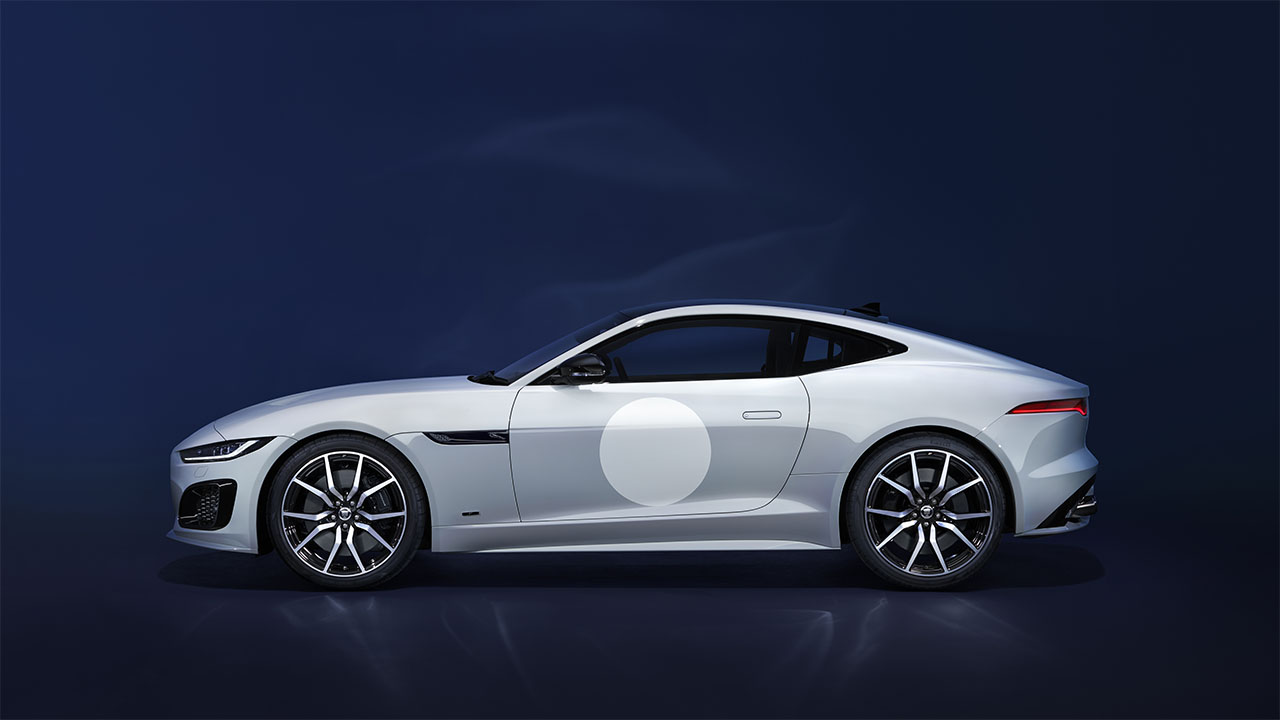
India's Tata Motors acquired Jaguar and Land Rover from Ford for $2.3 billion in 2008. Yet the deal preserved the brands' British identities and UK operations. Under Tata, new models followed steadily. The F-TYPE, unveiled in 2012 and often described as the spiritual successor to the E-Type, put a true sports car back at the heart of the range. Special versions such as the XE SV Project 8, quite possibly the most hardcore road-legal Jaguar ever made, showed that the appetite for performance had not faded. The F-PACE, Jaguar's first SUV, reached customers in 2016 and won World Car of the Year in 2017.
The I-PACE, Jaguar's first fully electric car, was revealed in production form in 2018 and collected a shelf of awards in 2019, including World Car of the Year and European Car of the Year.
What is the Jaguar new era?
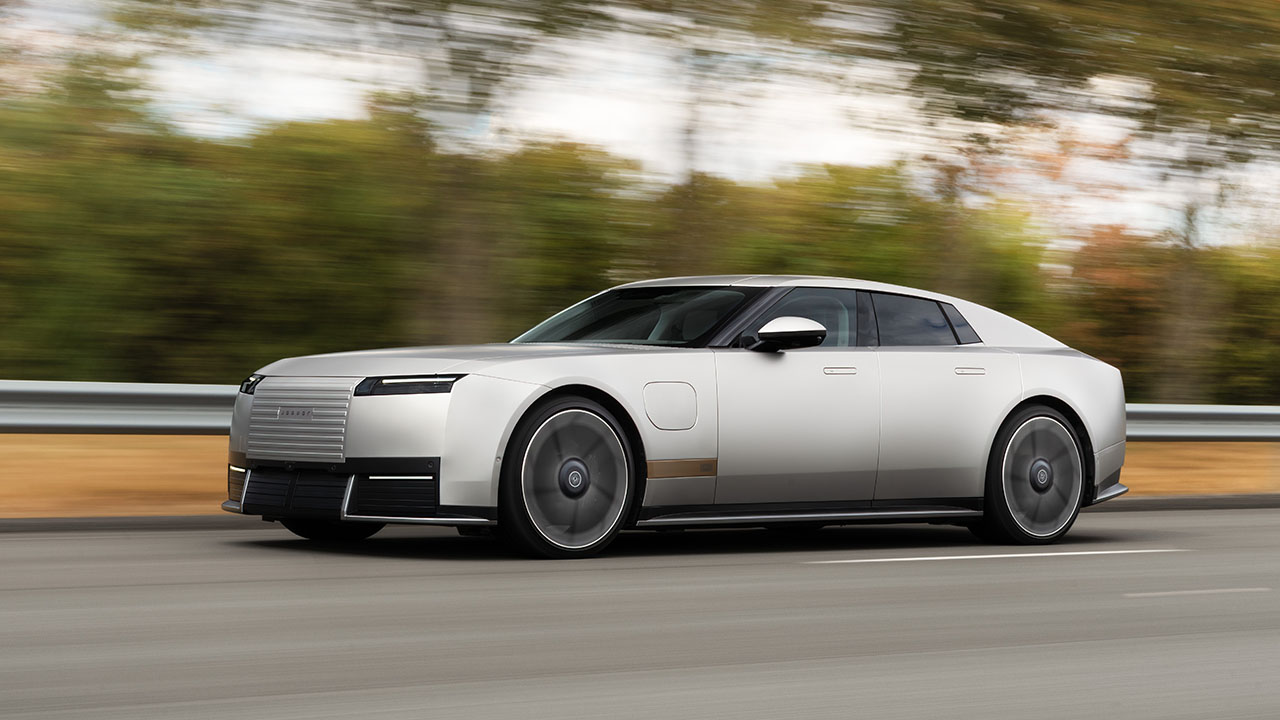
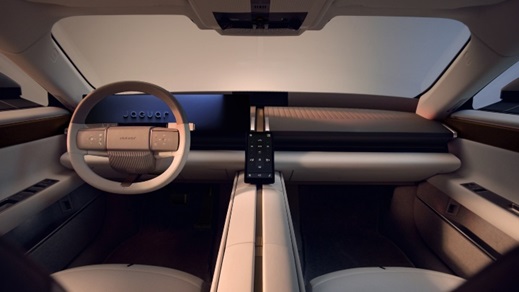
The Jaguar new era is the brand's transformation into an all-electric marque with an entirely fresh design language. It began with a bold rebrand and a campaign built around the phrase 'Copy Nothing', and within weeks the Type 00 concept had appeared in Miami. A striking two-door coupé, it previewed the direction the whole range would take.
The production car that follows from the concept is the Jaguar Type 01, a four-door electric grand tourer with a tri-motor powertrain. Its name is intended to mark the beginning of a new lineage of Jaguar cars, which makes the Type 01 much more than just another model.
Rawdon Glover, Jaguar's managing director, has said the company hopes that between 80 and 90 percent of buyers of its new cars will be first-time Jaguar owners, because the demographics of its previous customers made a new audience necessary.
For a brand whose heritage is built on looking different from everything around it, the new era is a logical next chapter. Jaguar chose to stop building its outgoing models to clear the way for it. Anyone who prefers to buy on proven ground can still choose from the used Jaguar range, and the new Jaguar cars show how the story continues.
Frequently asked questions
William Lyons and William Walmsley founded the company that became Jaguar in 1922, when they set up the Swallow Sidecar Company in Blackpool. Walmsley departed in 1935, which left Lyons to lead the business into the Jaguar era. The firm took the name Jaguar Cars Limited in 1945.
Jaguar is a British brand that began in Blackpool, and its parent company, Jaguar Land Rover, still has its head office in Coventry.
Jaguar is no longer owned by Ford. It belongs to India's Tata Group through Jaguar Land Rover, which Tata Motors bought from Ford in 2008. Ford owned Jaguar from 1990 until 2008, and before that the company had been independent after leaving British Leyland in 1984.
The E-Type is widely regarded as Jaguar's most iconic model. It was launched in 1961 with a claimed top speed of 150mph and stayed in production until 1974. Enzo Ferrari is often said to have called it the most beautiful car ever made, although the remark has never been confirmed.
Of the models Jaguar built before its new era, the F-PACE is the best all-round choice for most buyers, although the right model depends on individual needs. It is a spacious and comfortable SUV that works well for family life and longer journeys. The F-TYPE is the sports car for anyone who wants the full Jaguar driving experience, and the I-PACE is the natural choice for those ready to go electric. The XF is an elegant and refined saloon for drivers who prefer a lower seating position.
Reliability varies from one Jaguar to the next and depends heavily on age, mileage and how well an individual car has been maintained. A documented service history and a thorough inspection therefore say more about a car than the badge alone.
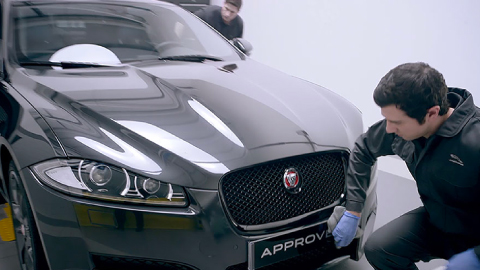
Every Approved Used Jaguar from Stratstone passes a 165-point inspection and comes with a one-year unlimited mileage warranty and one year of UK and Europe emergency assistance. Regular Jaguar servicing keeps a car in the condition its makers intended.
Yes, the Jaguar new era is built around fully electric cars, and the Type 01 four-door grand tourer is the production car that introduces it. The brand already has electric experience, as the I-PACE became its first all-electric model in 2018. Anyone exploring the used market can read more in the guide to the best used luxury electric cars.
Discover Jaguar at Stratstone
From a Blackpool sidecar workshop to Le Mans victories, the E-Type and now an electric future, Jaguar has reinvented itself more than once and kept its sense of style each time.
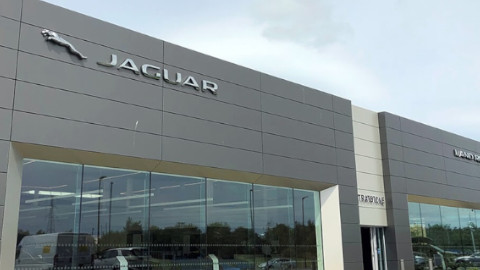
If the story has whetted your appetite, Stratstone can help with the next step. Explore Jaguar's new era to see where the brand is heading by making an enquiry at your nearest Stratstone Jaguar retailer. Browse an Approved Used Jaguar for a model with heritage and the reassurance of a thorough inspection. If you already own a Jaguar, our specialist servicing will help protect your investment.