Audi Engines Explained: What Does TFSI and TDI Mean?
05th May 2026
By Edward Cook

If you have ever stood in front of an Audi and found yourself squinting at the badge on the boot, you are certainly not alone. Alongside the familiar model name — your A3, your Q5 or your A6 — sits a string of letters and numbers that can feel like a secret language: 35 TFSI. 40 TDI. 50 TFSI e. So what does any of this actually mean, and should it make a difference when you are choosing your next car?
The short answer is yes, it matters quite a lot. Those badges tell you not only what fuel your Audi runs on, but which generation of engine technology sits under the bonnet and roughly how powerful it is — and every premium manufacturer has its own version of this language. BMW uses suffixes like 320i for petrol and 320d for diesel; Mercedes-Benz uses CGI and CDI.
Understanding Audi's system, however, puts you in a much stronger position when comparing models or simply making sure you pull up to the right pump. This guide explains everything you need to know about Audi TFSI and TDI in plain English.
- What does Audi TFSI mean?
- How does Audi TFSI work?
- Which Models Come With TFSI?
- Pros and Cons of Audi TFSI
- What does Audi TDI mean?
- How Does Audi TDI Work?
- Which Models Come With TDI?
- Pros and Cons of Audi TDI
- Alternatives to TFSI and TDI
What Does Audi TFSI Mean?
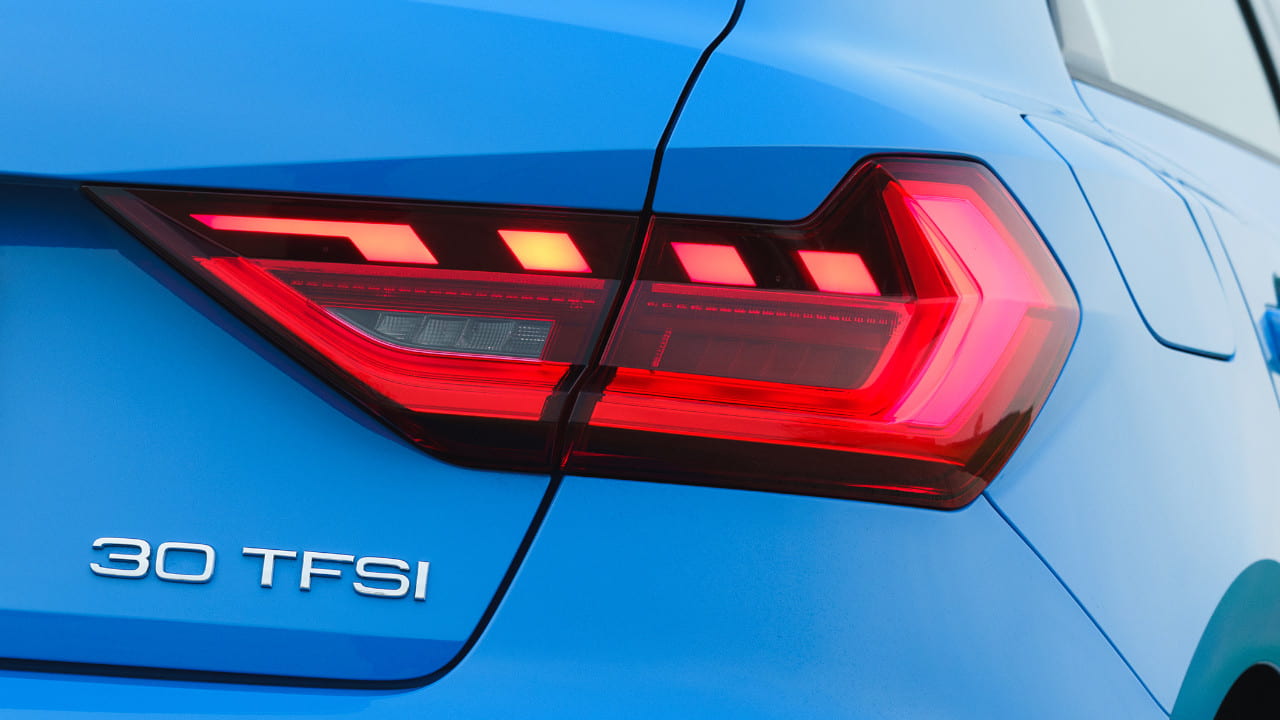
TFSI stands for Turbo Fuel Stratified Injection. It is the name Audi gives to its petrol engines, and it represents one of the more significant milestones in the brand's engineering history. When Audi introduced TFSI technology in the 2004 A3, it became the first manufacturer in the world to combine turbocharging with direct petrol injection in a production car. The technology it pioneered now powers supercars. Within a decade, turbocharged direct injection had become the leading approach across the industry.
In practical terms, if a petrol Audi was built after 2004, it almost certainly carries the TFSI badge, from the compact A1 right through to the flagship RS 6 Avant. The number that precedes the badge — 25, 30, 35, 40, 45, 50, 55, 60 — indicates where that engine sits within Audi's power hierarchy. Importantly, this is a ranking system rather than a measure of engine size. A 35 TFSI does not house a 3.5-litre engine; it simply sits one rung above a 30 TFSI in terms of output. As a rough guide, a 25 TFSI would be a smaller, more efficient engine, while a 55 or 60 points to something considerably more powerful.
How does Audi TFSI work?
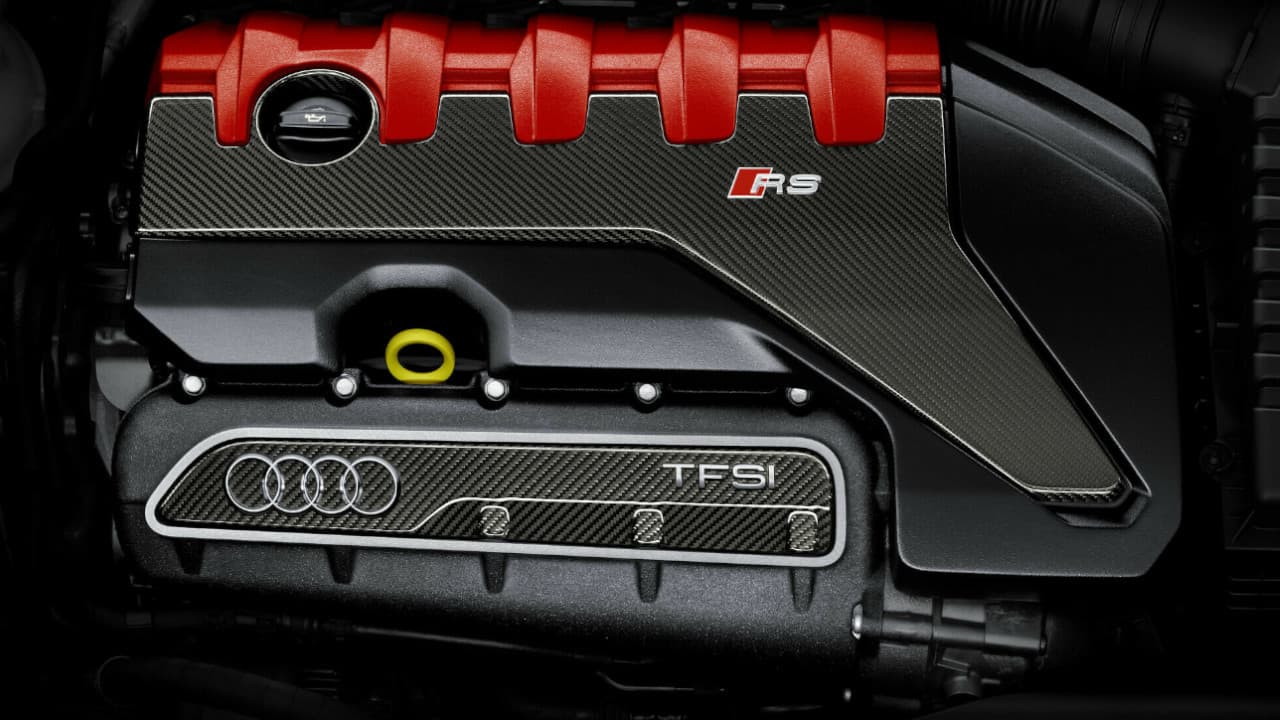
TFSI brings together two technologies that work in close cooperation. The first is turbocharging, which uses the engine's exhaust gases to spin a turbine, forcing more air into the combustion chamber. An increase in air enables a more powerful burn without requiring a larger engine. This makes turbocharging as much an efficiency tool as a performance one.
The second technology is Fuel Stratified Injection, Audi's system of delivering fuel directly into the combustion chamber rather than upstream into the intake port. This allows precise control over exactly how much fuel is introduced and when. One elegant side-effect of direct injection is that fuel entering the cylinder helps cool the combustion chamber, reducing the risk of premature ignition — a problem that had long limited how hard turbocharged petrol engines could be pushed.
Working in tandem, these two systems allow TFSI engines to deliver responsive, engaging performance while achieving far better fuel economy figures than a naturally aspirated engine of equivalent power could muster.
Which Models Come With TFSI?
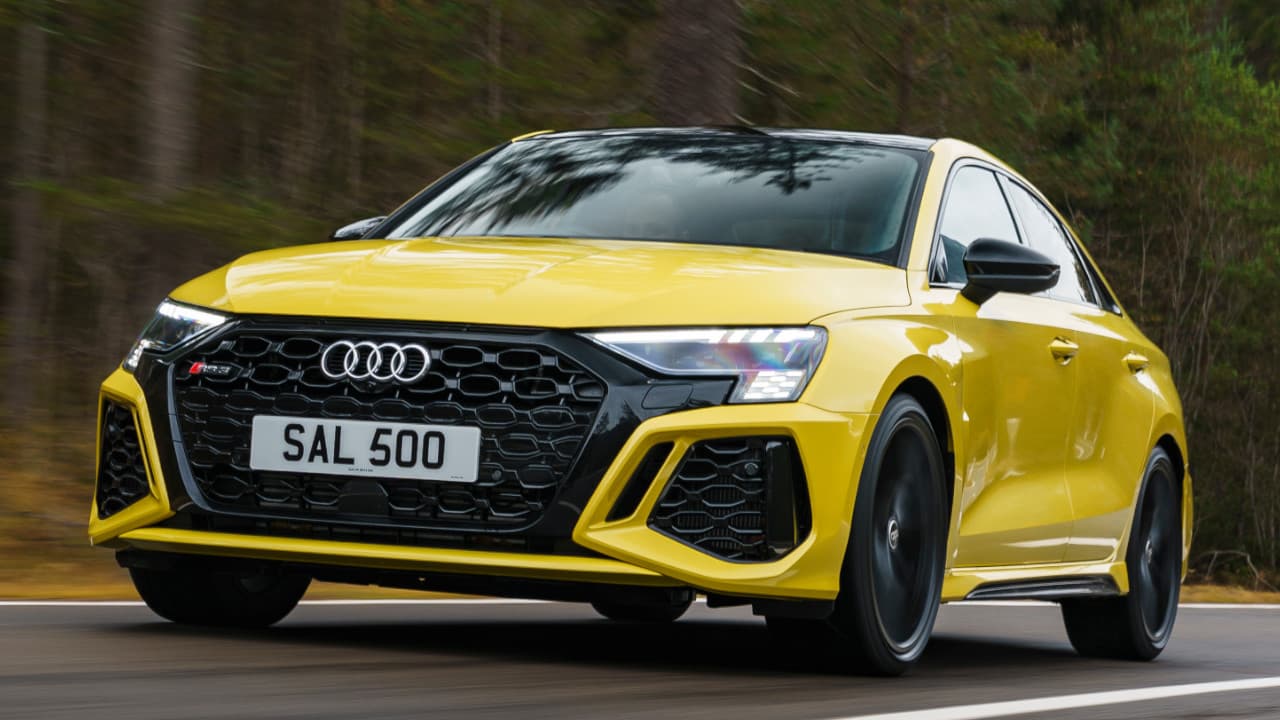
All current petrol Audi models will feature TFSI technology, but some standout options include:
- Audi A3 Sportback (35 TFSI): A versatile all-rounder for commuters and small families, balancing economy with everyday performance
- Audi Q5 (40 TFSI): For families who need SUV practicality without sacrificing the driving pleasure that defines the Audi experience
- Audi RS 6 Avant: For those who want sports car performance at the sharpest end of the Audi range (You will notice the RS 6 Avant carries no number because, at this level of performance, Audi feels none is needed)
Pros and Cons of Audi TFSI
Strengths:
- Responsive drive with excellent acceleration
- Impressive fuel efficiency relative to performance, with small engines delivering big results
- Available across the full range, from entry-level city cars to high-performance RS models
- The numbering hierarchy makes it easy to compare outputs across models at a glance
Weaknesses:
- To buyers who are unfamiliar with it, the numbering system can initially be confusing — a 30 TFSI is not a 3.0-litre engine
- The sophistication of the technology means specialist knowledge is required for repairs, which can result in higher workshop costs
What does Audi TDI mean?
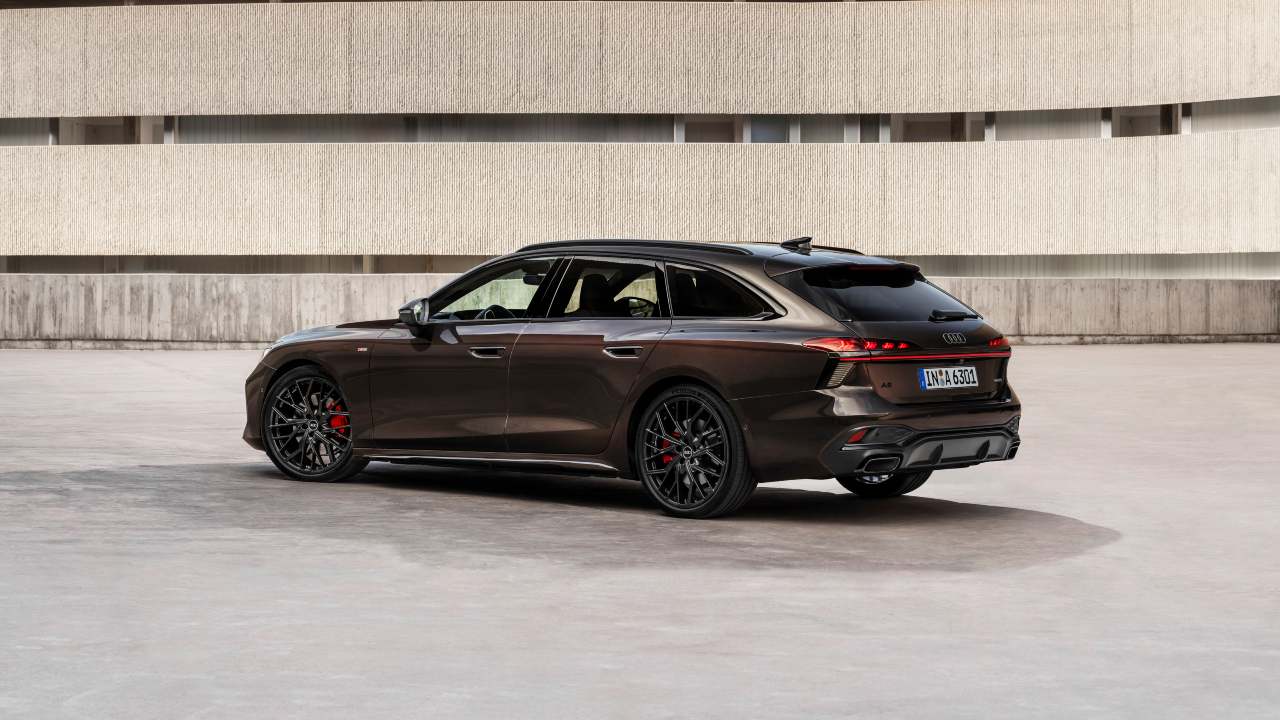
TDI stands for Turbocharged Direct Injection, and it is Audi's badge for its diesel engines. While TFSI is exclusive to Audi, TDI belongs to the broader Volkswagen Group family — shared with Volkswagen, SEAT and Škoda — though Audi has been central to its development from the very beginning.
That beginning is further back than many people realise. Audi's engineers were working on turbocharged direct injection diesel technology throughout the late 1970s and 1980s, long before it reached production.
Audi unveiled its landmark TDI engine at the Frankfurt Motor Show in 1989, fitted to the Audi 100. The original 2.5-litre five-cylinder produced 120bhp and could achieve 124mph, yet returned nearly 50mpg — figures that stunned the automotive world and effectively launched the era of the performance diesel in Europe.
The same engineering ambition that produced that engine later powered Audi's Le Mans-winning R10 TDI racing car, which was victorious at the 24 Hours of Le Mans in 2006. This was the first time a diesel-powered car had ever won the race.
As with TFSI, the number preceding TDI indicates power output rather than engine displacement, using the same 25 to 60 hierarchy.
How Does Audi TDI Work?
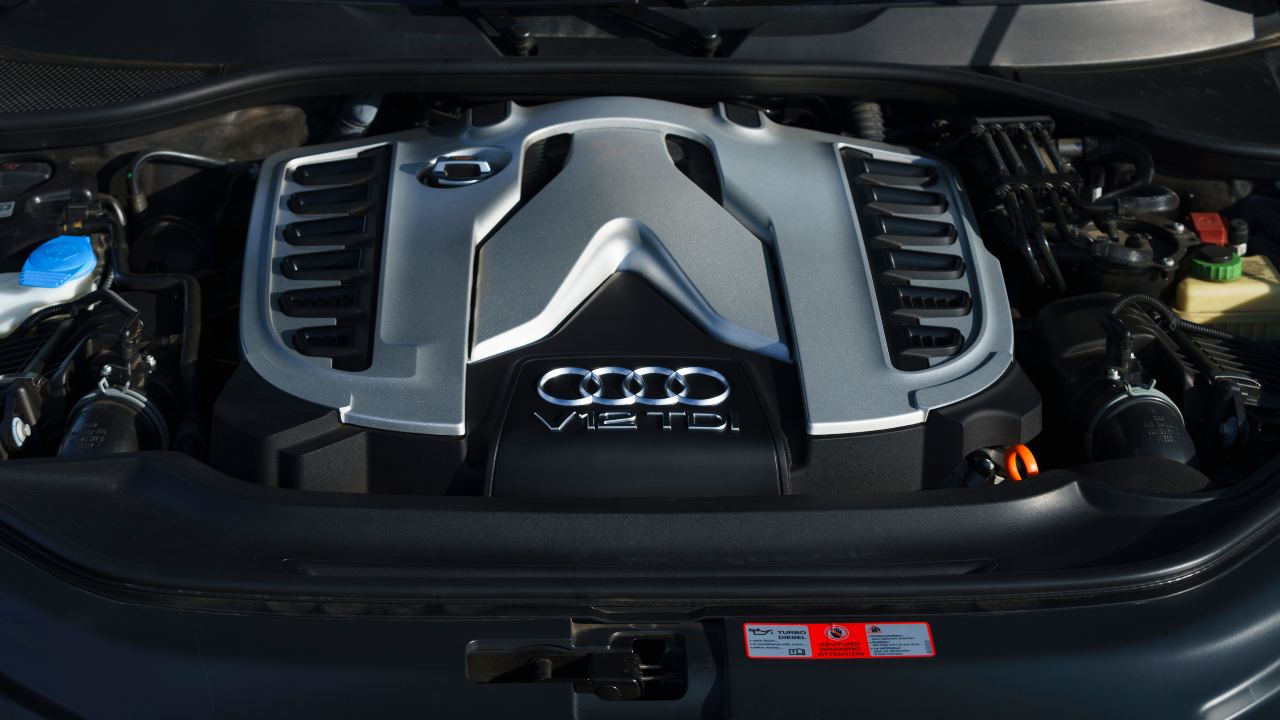
TDI and TFSI share the same core technologies — turbocharging and direct injection — but diesel combustion works differently.
Diesel engines do not use spark plugs. Instead, they rely on compression ignition. This means air is compressed so intensely within the cylinder that it reaches temperatures hot enough to ignite fuel spontaneously on contact. This requires far higher compression ratios than petrol engines, and the result is enormous torque at low engine speeds.
The torque advantage of TDI is striking in practice. A diesel Audi will typically generate its peak pulling power at low revs — often little more than a fast idle — whereas a petrol equivalent needs to be worked considerably harder to match it. On a long motorway run, towing a trailer, or simply carrying a full complement of passengers and luggage, this can be transformative.
Which Models Come With TDI?
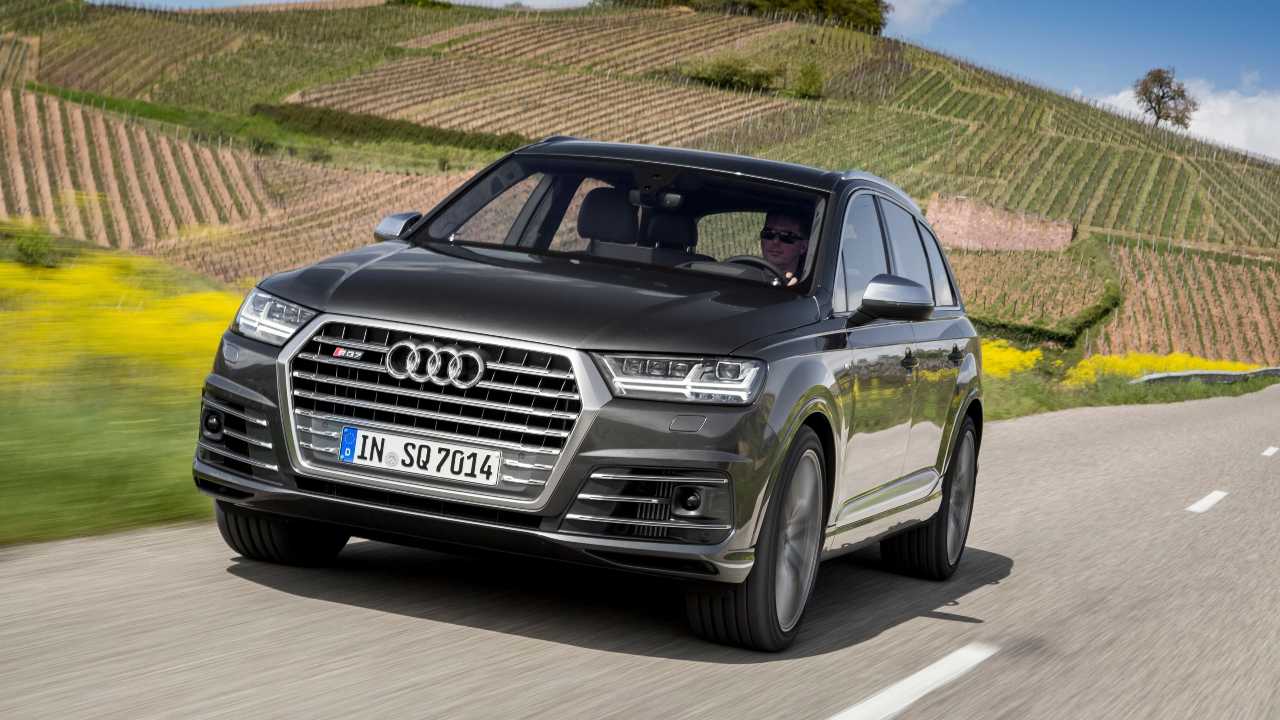
TDI engines are available across a large portion of the Audi range, particularly where long-distance economy and low-speed torque are priorities. Standout options include:
- Audi A3 Sportback (35 TDI): An excellent choice for high-mileage commuters who want to keep fuel costs in check on longer runs
- Audi Q5 (40 TDI): SUV versatility combined with real-world economy that makes a considerable difference over a three-year ownership period
- Audi A6 Saloon (40 TDI): The quintessential executive diesel: effortless cruising, strong torque for relaxed overtaking and all the refinement expected at this level
- Audi Q7 (45 or 50 TDI): For drivers who need seven-seat capability and the pulling power to tow
Pros and Cons of Audi TDI
Strengths:
- Exceptional real-world fuel economy, particularly on longer journeys and motorway driving
- Strong, accessible torque from low revs
- Fewer fill-ups and competitive CO₂ emissions, which can also curb company car tax payments
Weaknesses:
- Modern TDI systems include diesel particulate filters (DPFs) and AdBlue systems that require specialist servicing, which can push up maintenance costs
- DPF filters are best suited to longer journeys; predominantly short trips around town at low speeds can cause problems over time
- The ongoing expansion of Clean Air Zones across UK cities is worth factoring in for drivers based primarily in urban areas
Alternatives to TDI and TFSI
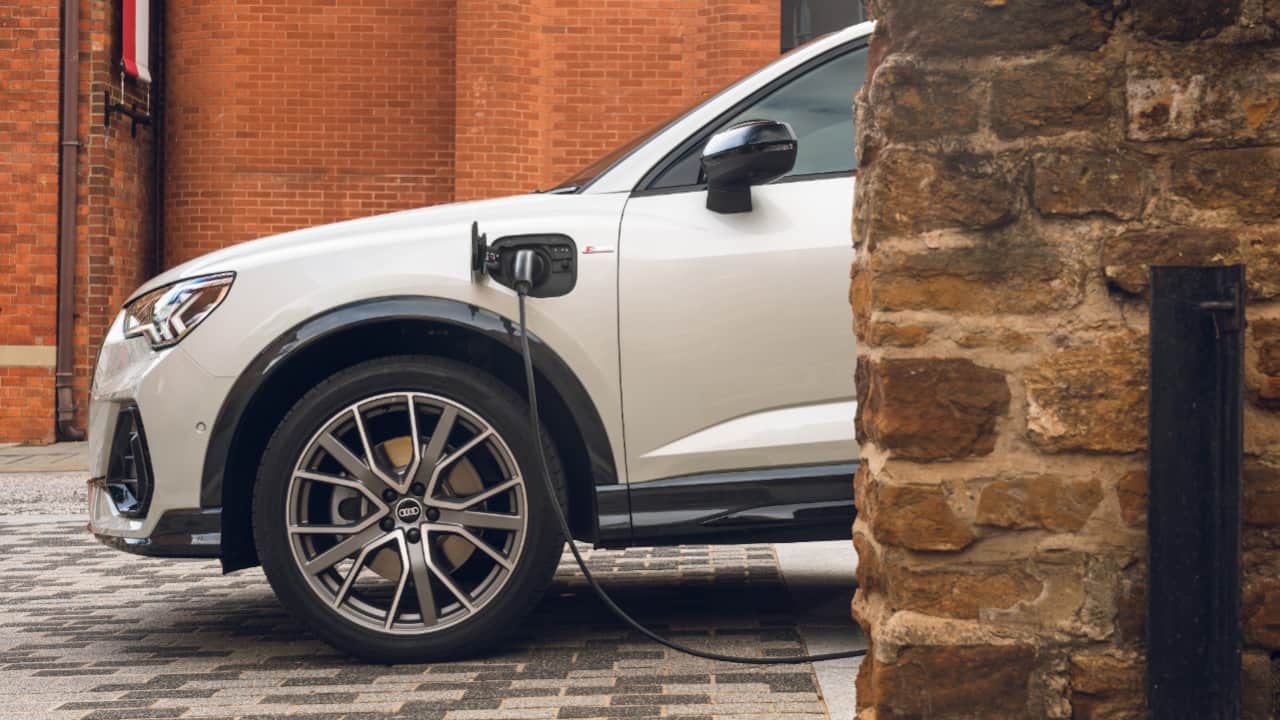
For drivers whose needs go beyond a conventional petrol or diesel, Audi offers a growing range of electrified options — and this is where the badge system becomes slightly more nuanced.
Plug-in hybrids (PHEV)
Until recently, Audi's plug-in hybrid models carried a TFSI e badge — a petrol TFSI engine working alongside an electric motor, offering a meaningful all-electric range for shorter trips and conventional combustion power for longer ones. These models do retain the TFSI designation, so they are not entirely separate from the petrol family.
From 2025, Audi has begun transitioning newer PHEV models to a clearer e-Hybrid naming convention — as seen on the new A5 e-Hybrid — designed to make the technology more immediately understandable for buyers. Either badge indicates a car that can be charged from the mains and driven on electricity alone for everyday use.
Fully electric (e-tron)
Audi's pure-electric models sit entirely outside the TFSI and TDI families. Identified by the e-tron name, the range spans the Q4 e-tron, Q6 e-tron, Q8 e-tron, A6 e-tron and the e-tron GT. No combustion engine, no fuel pump — just mains charging and the characteristic instant torque delivery that makes electric driving so distinctive. For many drivers, the e-tron range now offers the most efficient and appealing answer of all.
Frequently asked questions
Yes, in both cases. TFSI denotes a petrol engine, and TDI denotes diesel. The TFSI e suffix indicates a plug-in hybrid.
They reflect power output ranking, not engine size. Higher numbers mean more power, but a 40 TDI is not a 4.0-litre engine. Lower numbers also typically reflect entry-level points of a vehicle's engine line-up, while higher ones indicate enhanced options that typically come at a premium.
It all depends on how you drive. High-mileage motorway drivers will typically find TDI more economical. Short-distance drivers, city dwellers or those who prefer a more spirited driving character will generally find TFSI the stronger fit. For many, a TFSI e or e-Hybrid plug-in now offers a compelling middle ground.
No — TDI is a Volkswagen Group designation shared with Volkswagen, SEAT and Škoda. TFSI, however, is used exclusively by Audi.
Find Your Perfect Audi at Stratstone
What once served as a simple badge on the boot now reflects decades of engineering evolution. Understanding it offers a clearer sense of how a car will perform beyond the headline figures.
TFSI traces its lineage to a genuine world first in 2004. The same TDI engine architecture that began life in a 1989 saloon car has, in evolved form, won the world's greatest endurance race eight times. Both represent decades of engineering ambition, and both continue to improve.
Choosing between them — or indeed exploring the growing electric and hybrid alternatives — is ultimately a question of how and where you drive. The team at Stratstone Audi would be delighted to help you find the perfect solution for your own individual needs. Browse the current new Audi range, explore our used Audi cars, or visit your nearest Stratstone Audi retailer for a personal conversation with one of our specialists.